
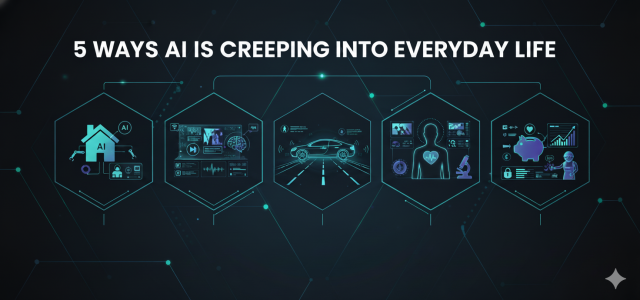
The future has arrived. It’s no longer something we have to imagine or hope for; it’s happening right now. Artificial intelligence (AI) has woven its way into nearly every facet of our lives, from the apps we use on our smartphones to the way we manage our homes. In many ways, AI has become an invisible force that makes our day-to-day lives easier, more efficient, and sometimes even more enjoyable.
But what does this really mean? How exactly is AI changing our everyday experiences? The answer lies in the practical applications of AI that are already transforming the way we interact with technology and the world around us. From the smart speaker you talk to each morning to the healthcare apps that guide your wellness, AI is everywhere – and it’s only getting smarter.
Let’s take a closer look at five specific ways AI is changing everyday life.
1. Transforming Communication: AI-Powered Assistants
Imagine waking up in the morning and, without lifting a finger, your day begins smoothly. Your AI-powered assistant knows your schedule, adjusts your thermostat, and reminds you of the meetings you have ahead. Whether it’s Alexa, Siri, or Google Assistant, these voice-activated assistants are some of the most common examples of AI in our daily lives.
These digital assistants are quickly becoming more sophisticated. They learn from your preferences over time, predicting what you’ll need before you even ask for it. If you’ve ever asked your assistant to play music or give you the weather, you’ve experienced AI in action. But the next generation of AI assistants will go beyond basic tasks.
For example, AI is being integrated into customer service chatbots and virtual agents that help businesses communicate more effectively with their customers. These bots can answer questions, provide technical support, or even recommend products based on previous interactions. The more you interact with them, the better they get at providing personalized responses.
The combination of text to voice and voice recognition technology means that these assistants can now understand more complex queries and engage in more natural conversations. Soon, they’ll be able to manage entire segments of your day autonomously, from scheduling meetings to tracking tasks.
2. Revolutionizing Healthcare: AI for Personalized Medicine
Healthcare is an area where AI is truly making a difference, and its impact is only expected to grow. Today, AI is used in many ways to improve healthcare services, from diagnosing diseases to predicting outcomes. For instance, AI systems can analyze medical images, like X-rays or MRIs, far faster than humans, spotting abnormalities that may be difficult to detect. This leads to earlier diagnoses and better treatment outcomes.
But perhaps the most exciting aspect of AI in healthcare is its potential to personalize medicine. In the future, AI could help doctors tailor treatments specifically to your genetic profile, lifestyle, and health history. Imagine a world where AI predicts your risk for certain diseases before they show symptoms, allowing you to make proactive decisions about your health.
One powerful application is in chronic disease management. AI systems can analyze your health data – from heart rate to sleep patterns – and provide real-time insights about your health. Wearable devices are already tracking vital signs, and AI can assess that data to offer personalized advice. For example, it can suggest a change in diet or alert you to a potential health concern based on trends it identifies in your data.
AI is also helping to improve mental health care by offering users virtual therapy sessions or emotional support through chatbots and AI-driven applications. These platforms can monitor your mood, track your mental health, and even provide therapeutic advice, offering comfort and guidance when it’s needed most.
3. Improving Accessibility: Empowering the Disabled
AI is not only changing the way we live; it’s helping to level the playing field for people with disabilities. One of the most important contributions of AI has been in enhancing accessibility features for those with visual, auditory, or mobility impairments.
For example, text to voice technology is empowering visually impaired individuals to navigate the world around them. By reading out text from books, websites, or documents, AI can make printed material accessible to anyone, anywhere. This has also extended to screen readers that help visually impaired users navigate the internet more easily.
For those with hearing impairments, AI is also making a difference. Real-time speech-to-text services, powered by AI, provide instant captions for videos, conversations, and meetings. This has huge implications for accessibility in education, work environments, and even entertainment, enabling people who are deaf or hard of hearing to engage more fully in society.
Another groundbreaking example is the development of AI-powered assistive technologies, such as smart prosthetics or exoskeletons, which help people with mobility issues regain some level of independence. These technologies use AI to learn and adapt to their user’s movements, making the experience more seamless and natural.
4. Personalizing Entertainment: AI in Media and Content Creation
When was the last time you logged onto a streaming service without being bombarded by personalized recommendations? Whether it’s a movie suggestion from Netflix or a playlist on Spotify, AI is working behind the scenes to curate content tailored just for you. This personalization is powered by AI algorithms that analyze your viewing or listening history, as well as the preferences of users with similar tastes.
But the future of AI in entertainment goes beyond recommendations. We’re already seeing AI used to create new forms of content. AI-generated music and deepfake technology are opening up new possibilities for entertainment production. AI can write songs, generate artwork, and even script entire movies, creating content that’s uniquely tailored to your preferences.
Furthermore, AI is transforming video games by creating more dynamic, responsive, and intelligent non-player characters (NPCs). These characters can adjust their behavior based on player actions, providing a more immersive experience. The ability for AI to adapt in real-time to user behavior and preferences will make gaming experiences feel even more personalized and lifelike.
The future could also see AI in content creation tools. For instance, AI tools could assist writers, helping them generate ideas, suggest edits, or even complete entire drafts based on a given prompt, making content production faster and more efficient.
5. AI and the Future of Work: Streamlining Tasks and Increasing Productivity
AI is already changing the workplace, and in the future, it will continue to play a central role in how we do our jobs. AI-driven systems are automating repetitive tasks, helping employees focus on more creative and strategic aspects of their work.
Take customer service, for example. AI chatbots are already handling routine inquiries, allowing customer support teams to focus on more complex issues. Similarly, AI is streamlining data entry, scheduling, and even project management. AI-powered tools can analyze huge amounts of data, uncover insights, and generate reports, all of which would normally take a human hours or days to complete.
As AI continues to evolve, it will become increasingly skilled at understanding context, making decisions, and improving efficiency in ways that we haven’t yet imagined. In industries such as healthcare, finance, and law, AI is expected to assist professionals by automating administrative tasks, improving decision-making, and offering new insights based on data patterns.
Moreover, AI is reshaping how we work remotely. Virtual assistants, powered by AI, can schedule meetings, organize projects, and even manage emails, making remote work more efficient than ever before. The more AI is integrated into the workplace, the more time and energy it will save workers, allowing them to be more productive and less stressed.
Conclusion: Embracing the AI-Driven Future
The impact of AI on our everyday lives is undeniable, and the future holds even more exciting possibilities. From improving communication and healthcare to enhancing accessibility and personalizing entertainment, AI is making our world smarter and more efficient. As we continue to embrace these innovations, we can look forward to a future where AI not only makes our lives easier but also empowers us to do more, learn more, and experience more.
However, as with any new technology, we must approach it thoughtfully and responsibly. Embracing AI means considering its ethical implications and ensuring that its benefits are accessible to all. But if we navigate this shift wisely, the future of AI could be one of greater equality, creativity, and opportunity for everyone.
So, whether it’s through text to voice technology helping those with disabilities or AI systems making healthcare more personalized, one thing is clear: AI is here to stay – and it’s already changing our lives in profound ways. The future of AI is bright, and it’s only just beginning.