
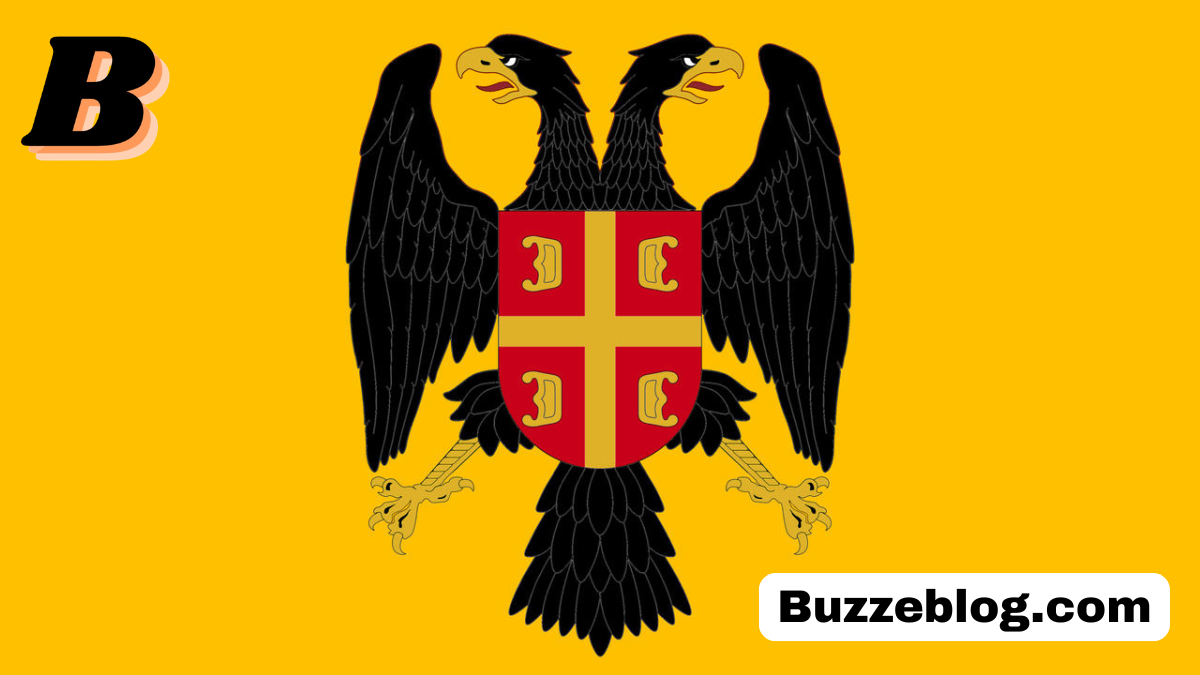
Introduction: Understanding the Importance of the Byzantine Empire Flag
When people think about powerful historical empires, they often imagine massive armies, grand architecture, and influential rulers. Yet one of the most overlooked aspects of imperial identity is the flag. The Byzantine Empire flag was far more than a decorative banner—it was a symbol of authority, faith, continuity, and cultural sophistication. It represented a civilization that lasted over a thousand years and bridged the ancient and medieval worlds.
Unlike modern nations that operate under one official flag, the Byzantine Empire used a variety of banners depending on the era, the ruling dynasty, and the context in which the flag appeared. Military units had their own standards, emperors commissioned ceremonial banners, and religious processions displayed sacred cloths that reflected the empire’s deep connection to Christianity. Each banner told a story about how Byzantium saw itself and how it wished to be perceived by allies and enemies alike.
Studying the Byzantine flag is not just about aesthetics—it is about understanding the political philosophy of an empire that believed its authority was divinely sanctioned. These banners carried theological meaning alongside political messaging. Soldiers marched beneath them, citizens gathered around them during celebrations, and foreign diplomats viewed them as statements of unmatched prestige.
Even today, centuries after the fall of Constantinople, the imagery associated with Byzantine flags continues to influence modern heraldry, religious iconography, and national symbols. This lasting impact demonstrates how powerful visual identity can be. In many ways, the Byzantine Empire flag remains one of history’s most compelling examples of how symbolism shapes legacy.
The Historical Foundations of Byzantine Banners
To fully appreciate Byzantine flags, we must begin with their roots in the Roman Empire. Byzantium did not emerge from nothing—it was the eastern continuation of Rome. When Emperor Constantine established Constantinople as the new capital in the 4th century, he carried forward Roman traditions while gradually reshaping them to reflect a Christian worldview.
Roman military forces used standards known as vexilla, typically square banners suspended from a horizontal crossbar. These were practical tools that allowed soldiers to identify their units during chaotic battles. But they were also emotional anchors; troops often fought fiercely to protect their standards because losing one was considered a disgrace.
As the empire transitioned into a more explicitly Christian state, these military symbols began to evolve. Pagan imagery slowly disappeared and was replaced by sacred signs such as crosses and Christograms. This transformation mirrored a larger societal shift—the fusion of imperial authority with Christian belief.
Over time, Byzantine banners became more elaborate than their Roman predecessors. Silk fabrics replaced rougher materials, gold embroidery added brilliance, and carefully chosen colors conveyed status. These were no longer merely battlefield markers; they were expressions of a highly organized and ideologically driven empire.
Understanding this evolution helps explain why Byzantine flags feel so layered. They were born from Roman practicality but matured into sophisticated carriers of spiritual and political meaning.
The Labarum: The Banner That Changed Imperial Identity
One of the earliest and most influential banners associated with the Byzantine world was the Labarum. Its importance cannot be overstated because it represented a turning point—not just in flag design, but in imperial identity itself.
The Labarum is closely tied to Emperor Constantine, who reportedly experienced a vision before a decisive battle. According to historical tradition, he saw a symbol connected to Christ and was instructed to fight under it. After securing victory, Constantine adopted the emblem for his military standard.
At the center of the Labarum was the Chi-Rho, formed from the first two Greek letters of Christ’s name. This simple yet powerful symbol communicated a radical message: the empire now marched under divine protection.
The psychological impact was enormous. Soldiers believed they were participating in a sacred mission rather than merely serving a political ruler. This sense of spiritual purpose often translated into stronger morale on the battlefield.
As the centuries progressed, the influence of the Labarum echoed through later Byzantine banners. Even when designs became more complex, the idea that imperial authority was blessed by heaven remained a constant theme. In many ways, the Labarum laid the philosophical foundation for all Byzantine flags that followed.
The Meaning Behind Byzantine Colors
Color played a critical role in Byzantine visual culture. Every shade carried intention, and misunderstanding these colors means missing half the message the flag conveyed.
Purple stood at the top of the hierarchy. Producing purple dye was extraordinarily expensive because it came from thousands of crushed sea snails. This rarity transformed the color into a symbol of imperial exclusivity. Only the emperor and his immediate circle could use it freely, which meant any banner featuring purple immediately communicated legitimate rule.
Gold was equally significant but served a different symbolic function. While purple represented earthly authority, gold suggested divine radiance. It evoked the glow of heavenly light frequently depicted in Byzantine mosaics and religious art. A banner woven with gold thread seemed almost otherworldly when sunlight struck it.
Red often symbolized strength, sacrifice, and the willingness to defend the empire at all costs. It was particularly fitting for military standards carried into battle.
White, though less dominant, conveyed purity and spiritual devotion. When used alongside crosses or religious inscriptions, it reinforced the empire’s Christian identity.
Together, these colors formed a sophisticated visual language. People did not need to read inscriptions to understand what a banner meant—the colors spoke instantly.
Christianity’s Powerful Influence on Flag Design
Religion was inseparable from governance in Byzantium. The emperor was seen not only as a political leader but also as God’s representative on Earth. Naturally, flags reflected this sacred dimension.
The cross became one of the most common elements in Byzantine banners. Sometimes it appeared alone, bold and unmistakable. Other times it was surrounded by decorative motifs or accompanied by inscriptions praising divine authority.
Icons of Christ, the Virgin Mary, and revered saints occasionally appeared on ceremonial banners. These were especially prominent during religious festivals or imperial processions, where the goal was not intimidation but reverence.
What makes Byzantine symbolism fascinating is how seamlessly it blended theology with politics. A banner did not simply declare loyalty to the empire—it implied participation in a cosmic order.
Carrying such a flag was an act of devotion as much as duty. This fusion of belief and governance helped Byzantium maintain cohesion for centuries, even during periods of intense crisis.
The Double-Headed Eagle: A Symbol of Supreme Authority
Few images are as strongly associated with Byzantine heritage as the double-headed eagle. Though it rose to prominence relatively late in the empire’s history, its symbolism proved so enduring that it survived long after Byzantium fell.
The eagle itself has ancient roots as a representation of strength and vigilance. By giving it two heads, Byzantine symbolism elevated the creature into something even more profound.
One interpretation suggests the heads face east and west, reflecting the empire’s geographic position between continents. Another sees them as representing the union of church and state—two realms operating in harmony under imperial oversight.
Regardless of interpretation, the message was unmistakable: the empire watched over multiple worlds simultaneously.
The double-headed eagle became especially associated with the final ruling dynasty of Byzantium. Even as the empire shrank territorially, this emblem projected confidence and continuity. It reassured citizens that their civilization still possessed divine legitimacy.
Today, variations of the symbol appear in Eastern European heraldry and Orthodox traditions, demonstrating how deeply it resonated across cultures.
The Tetragrammatic Cross and the Final Imperial Era

As the Byzantine Empire entered its later centuries, one banner emerged as particularly recognizable—the tetragrammatic cross. This design featured a large central cross surrounded by four smaller symbols often interpreted as stylized firesteels or the Greek letter beta.
Historians have debated the meaning for generations. One widely accepted interpretation connects the symbols to a phrase translating roughly to “King of Kings, ruling over those who rule.” Whether literal or metaphorical, the design clearly emphasized imperial supremacy.
What makes this banner especially compelling is the historical moment it represents. The empire faced mounting pressure from external forces, yet culturally it remained vibrant. Art, scholarship, and theology flourished even as political stability weakened.
The tetragrammatic cross therefore symbolizes resilience. It reflects a society determined to assert its identity despite looming threats.
After the fall of Constantinople, the banner did not simply vanish from memory. Instead, it became a lasting reminder of a civilization that refused to fade quietly into history.
Military Functions: Flags as Strategic Instruments
In medieval warfare, confusion could spread rapidly. Armor obscured faces, dust clouded vision, and battle formations shifted unpredictably. Flags provided clarity amid chaos.
Byzantine commanders used banners to coordinate troop movements. A raised standard might signal an advance, while a repositioned banner could indicate retreat or regrouping. These visual cues were essential before the invention of modern communication methods.
But the importance of flags went beyond logistics—they were psychological weapons.
Imagine confronting an army whose banners shimmered with gold and displayed sacred imagery suggesting divine favor. Such visuals could unsettle opponents before combat even began.
For Byzantine soldiers, protecting the flag was a matter of honor. Losing one could damage morale, while capturing an enemy standard often delivered a powerful emotional victory.
Thus, the Byzantine Empire flag operated on both practical and symbolic levels, shaping the emotional landscape of warfare.
Ceremonial Splendor and Political Messaging
Outside the battlefield, banners transformed cities into stages for imperial theater. During coronations, triumphal returns, or religious celebrations, flags lined major streets and public squares.
Foreign visitors frequently wrote about being overwhelmed by the spectacle. The display was intentional—Byzantium wanted ambassadors to witness its wealth, order, and sophistication.
Different banners also communicated rank within the imperial hierarchy. Officials carried distinct standards that immediately signaled their authority. This visual structure reinforced the empire’s obsession with protocol.
In political contexts, flags acted almost like silent speeches. Without uttering a word, they declared stability, legitimacy, and divine backing.
Such calculated use of imagery helps explain why the Byzantine Empire maintained influence far beyond what its shifting borders might suggest.
The Evolution of Byzantine Flags Across a Millennium
Few states in history lasted as long as Byzantium, and its banners evolved accordingly.
Early designs leaned heavily on Roman simplicity. Over time, artistic techniques improved, allowing for richer fabrics and more intricate embroidery.
As Christianity became increasingly central, religious symbolism grew more pronounced. Later centuries also reflected broader medieval artistic trends, including more structured geometric layouts.
Despite these stylistic changes, one philosophical thread remained unbroken: authority flowed from a divine source.
This consistency gave Byzantine imagery remarkable coherence. Even when designs differed, they felt connected by a shared worldview.
Common Misconceptions About Byzantine Flags
One of the most persistent myths is that the Byzantine Empire had a single official flag comparable to modern national banners. In reality, the empire operated within a flexible symbolic system.
Multiple standards existed simultaneously, each serving specific purposes. Military units had identifying banners, emperors commissioned ceremonial cloths, and religious authorities carried sacred icons during processions.
Another misconception is that the double-headed eagle dominated the empire from the beginning. While iconic today, it gained widespread recognition primarily in the later period.
Recognizing these nuances prevents us from oversimplifying a civilization known for its complexity.
Cultural Influence Beyond Byzantium
The fall of Constantinople marked the end of an empire but not the end of its symbols. Neighboring cultures absorbed Byzantine imagery and adapted it to their own traditions.
The double-headed eagle, for example, appears in several national coats of arms. Its continued use signals continuity with a prestigious past.
Orthodox religious art also preserves many Byzantine visual elements, from color symbolism to geometric balance.
This cultural transmission illustrates a powerful truth: symbols often outlive the societies that create them.
Artistic Mastery Behind Imperial Banners
Creating a Byzantine banner required exceptional craftsmanship. Artisans worked with luxurious materials such as silk, sometimes produced under strict imperial supervision.
Gold thread added brilliance, while carefully prepared dyes ensured long-lasting color. Embroiderers invested countless hours into intricate patterns that balanced beauty with symbolic clarity.
These banners were valuable possessions, occasionally treated with reverence similar to sacred relics.
Their artistry reflects the broader sophistication of Byzantine culture—a society that valued refinement alongside power.
Decoding Symbolism: How to Read a Byzantine Flag
Understanding a Byzantine banner is like reading a visual manuscript.
A cross points to faith.
An eagle asserts dominance.
Purple signals legitimacy.
Gold suggests divine presence.
Each element contributes to a layered narrative about authority and order.
This complexity is one reason Byzantine art continues to captivate historians. Every symbol invites interpretation, encouraging us to look beyond surface appearances.
Comparing Byzantine Flags with Western Heraldry
While Western Europe eventually developed rigid heraldic systems focused on family lineage, Byzantine symbolism operated differently.
Instead of emphasizing noble ancestry, Byzantine banners projected universal imperial authority. The message was less about bloodlines and more about sacred rulership.
This contrast reveals broader cultural differences between medieval East and West. Byzantium prioritized ideological unity, whereas Western heraldry often celebrated dynastic identity.
Both approaches were effective—but they spoke to distinct visions of power.
The Lasting Legacy of the Byzantine Empire Flag
Why does a medieval banner still matter today?
Because it represents more than history—it embodies resilience, cultural fusion, and the enduring human need for symbols.
Byzantium stood at the crossroads of continents and traditions. Its flags reflected that unique position, blending Roman heritage, Greek intellect, and Christian theology.
Modern designers still draw inspiration from Byzantine principles such as symmetry, bold contrast, and meaningful imagery. These elements communicate authority instantly, proving that good design transcends time.
Ultimately, the Byzantine Empire flag reminds us that symbols can preserve identity long after political structures collapse.
Conclusion: A Banner That Carried an Empire’s Soul
The Byzantine Empire flag was never just decorated fabric. It was a carefully constructed statement about who the Byzantines were and what they believed.
Across centuries marked by triumph and turmoil, these banners unified armies, impressed foreign powers, and reassured citizens of divine protection.
Today, they remain powerful historical artifacts—not merely because of their beauty, but because they reveal how a civilization understood itself.
When we study these flags, we glimpse the soul of an empire that shaped global history in profound ways. Their legacy endures as proof that symbols, when crafted with intention, can echo across millennia.
FAQs
What was the most famous symbol on Byzantine flags?
The double-headed eagle and the Christian cross were among the most iconic symbols.
Did the Byzantine Empire use only one flag?
No, multiple banners existed depending on the era, purpose, and ruling dynasty.
What did purple represent on Byzantine banners?
Purple symbolized imperial authority and legitimate rule.
Why were religious symbols common on the flags?
Because the empire viewed its power as divinely sanctioned.
What is the tetragrammatic cross?
It is a cross with four surrounding symbols linked to late Byzantine imperial imagery.
Were Byzantine flags important in battle?
Yes, they helped coordinate troops and boosted morale.
Did Roman traditions influence Byzantine banners?
Strongly—early designs evolved directly from Roman military standards.
Are Byzantine symbols still used today?
Yes, especially in Eastern European heraldry and Orthodox traditions.
What materials were typically used to create the flags?
Silk, gold thread, and richly dyed fabrics were common choices.
Why is the Byzantine Empire flag historically significant?
It reveals how the empire projected power, faith, and cultural identity.
Also read: Kate Garraway New Partner