
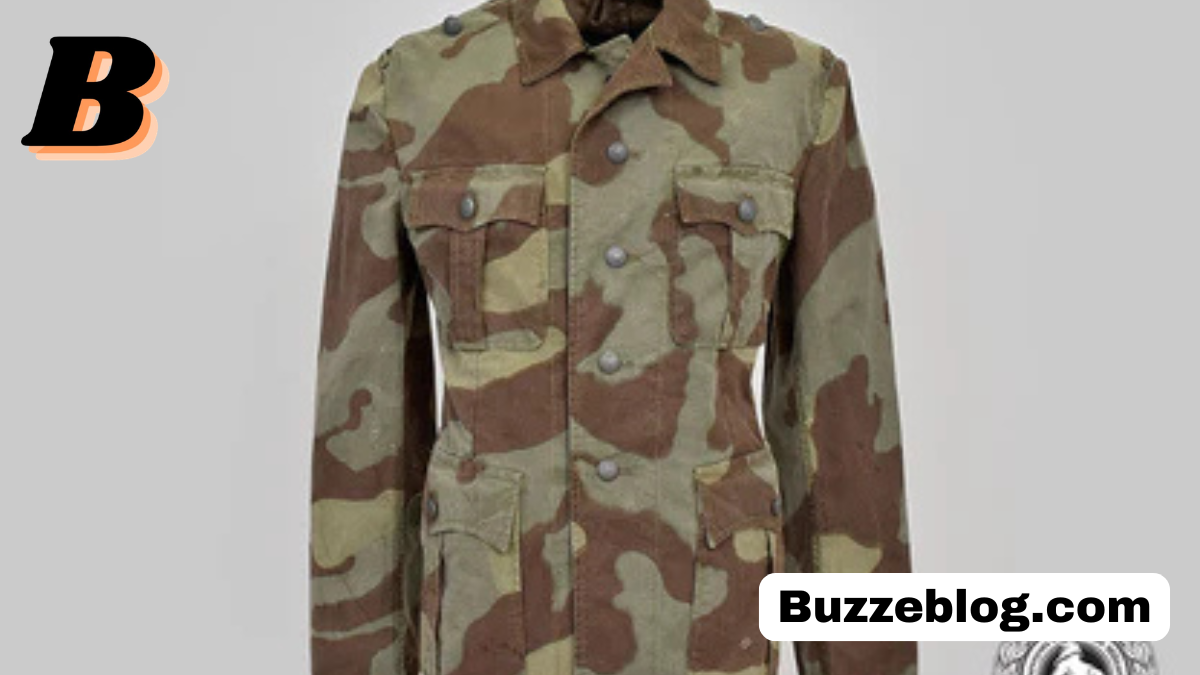
The story of Waffen SS camo is one of the most studied topics in military history, not only because of its technical innovation but also because of the complex and controversial organization that used it. Camouflage transformed battlefield tactics during the twentieth century, and the patterns developed for the Waffen-SS represented some of the earliest large-scale experiments in disruptive military clothing. Today, historians, collectors, and designers examine these patterns from historical, technological, and cultural perspectives.
Understanding Waffen SS camouflage requires more than simply looking at colors and shapes. It involves exploring how warfare evolved, how militaries responded to environmental challenges, and how textile manufacturing adapted to new strategic demands. While the subject is tied to the broader history of World War II, it also illustrates the rapid pace of innovation that occurred during that period.
This article takes a detailed, educational approach to the topic. Rather than glorifying the organization, the goal is to explain how camouflage emerged, how it was designed, why it mattered tactically, and how it continues to influence modern military gear and even civilian fashion.
What Was Waffen SS Camo?
Waffen SS camo refers to the camouflage clothing and equipment worn by the armed wing of the SS during World War II. Unlike many other military forces at the time, which relied largely on solid-colored uniforms, the Waffen-SS experimented extensively with patterned fabrics intended to help soldiers blend into forests, fields, and seasonal landscapes.
The introduction of camouflage into widespread military use marked a significant shift in battlefield thinking. Armies had long understood the importance of concealment, but earlier methods typically relied on terrain positioning rather than specialized clothing. Camouflage uniforms represented a proactive strategy—soldiers themselves became harder to detect.
What made Waffen SS camo particularly notable was its variety. Instead of relying on a single pattern, designers created multiple versions tailored to different environments such as spring foliage, autumn forests, and snowy terrain. This adaptability reflected a growing awareness that warfare was increasingly mobile and unpredictable.
It is important to view this subject through a historical lens. The Waffen-SS was part of Nazi Germany’s military apparatus, and its legacy is deeply connected to the broader atrocities and devastation of the war. Studying its equipment does not celebrate the organization; rather, it helps scholars understand technological development during one of history’s most turbulent periods.
The Origins of Military Camouflage
Camouflage did not begin with the Waffen-SS. Its roots stretch back centuries, though its modern form emerged in the late nineteenth and early twentieth centuries as firearms became more accurate and reconnaissance improved.
Before camouflage uniforms existed, soldiers often wore bright colors. These uniforms served purposes such as unit identification and morale, but they made troops highly visible. As warfare became deadlier, visibility turned into a liability.
During World War I, several armies began experimenting with concealment techniques. Snipers used ghillie suits, artillery units painted equipment in irregular patterns, and observers recognized how color affected detection. However, widespread adoption of patterned uniforms remained limited.
By the interwar period, military thinkers realized that future conflicts would demand better concealment. Aircraft reconnaissance and improved optics meant that hiding troops would be essential. Camouflage began to shift from a niche tactic to a core strategic concept.
The Waffen-SS became one of the earliest forces to push camouflage into systematic production, helping set a precedent that many postwar militaries would later follow.
The Vision Behind Waffen SS Camouflage
One of the defining characteristics of Waffen SS camo was that it emerged from deliberate research rather than improvisation. Designers studied light, shadow, vegetation, and seasonal color changes to determine what patterns would best disrupt the human silhouette.
The concept was based on what is often called “disruptive coloration.” Instead of trying to make a soldier invisible—which is nearly impossible—the goal was to break up recognizable outlines so that the brain struggles to identify a human shape.
Designers understood that the eye naturally looks for familiar forms such as shoulders, helmets, and upright posture. By overlaying irregular shapes across a uniform, camouflage forced observers to spend more time interpreting what they saw, sometimes delaying detection long enough to provide a tactical advantage.
Another forward-thinking element was reversibility. Some smocks were designed with different patterns on each side, allowing soldiers to adjust their appearance based on the season. This flexibility was relatively advanced for the time and demonstrated an awareness of logistical efficiency.
Early Patterns and Experimental Designs
The earliest Waffen SS camo patterns appeared in the 1930s, a period when Germany was rapidly rebuilding its military capacity. These first designs were experimental and often produced in smaller quantities, but they laid the groundwork for later developments.
One of the key breakthroughs was the use of multi-color printing techniques. Instead of layering large patches of color, designers used smaller shapes that blended at a distance while remaining visually complex up close. This dual effect enhanced concealment across different viewing ranges.
Another innovation involved studying natural textures rather than simply copying colors. Leaves, bark, and grass do not form neat shapes, so patterns were intentionally irregular. This attention to realism helped camouflage perform more effectively in varied terrain.
Manufacturing these fabrics was not simple. Textile printing required precision, and wartime resource constraints sometimes affected consistency. As a result, surviving examples often show slight variations, which today fascinate historians and collectors alike.
Despite production challenges, these early experiments proved successful enough that camouflage became increasingly common among Waffen-SS units as the war progressed.
Seasonal Adaptation and Environmental Strategy
A major strength of Waffen SS camo was its seasonal adaptability. Designers recognized that landscapes transform dramatically throughout the year, and a uniform that worked in summer could become highly visible in autumn or winter.
Spring patterns often featured lighter greens and softer contrasts, mimicking new foliage. Summer versions used denser greens to reflect thick vegetation. Autumn designs incorporated browns and muted tones to match fallen leaves and drying plants.
Winter posed a different challenge altogether. Snow-covered terrain demanded lighter colors, and many soldiers used white oversuits to reduce visibility against snowy backgrounds. This approach was not unique to the Waffen-SS, but it demonstrated the growing sophistication of camouflage planning across militaries.
Seasonal camouflage also had psychological benefits. Soldiers who felt less exposed were sometimes more confident in reconnaissance or defensive positions. While equipment alone cannot determine morale, it can influence how troops perceive their safety.
The emphasis on environmental matching continues to shape modern camouflage design, where patterns are often tailored to specific operational regions.
The Science of Disruption
To fully appreciate Waffen SS camo, it helps to understand the science behind visual perception. Human eyesight is remarkably good at detecting patterns, especially familiar ones like the human body.
Camouflage works by interrupting this recognition process. Irregular shapes, overlapping colors, and varied contrasts create visual noise, making it harder for observers to distinguish a person from the background.
Distance plays an important role as well. A pattern that looks chaotic up close may appear blended from far away. Designers aimed for this layered effect so that concealment remained effective across multiple ranges.
Lighting conditions further complicate visibility. Shadows can either reveal or hide a figure depending on how colors interact with natural light. Effective camouflage accounts for these variables by avoiding overly uniform tones.
Although modern technology has refined these principles using digital modeling, the foundational ideas were already being explored during the era of Waffen SS camouflage.
Camouflage Garments and Equipment
Waffen SS camo appeared on a range of garments, not just jackets. Smocks were particularly common because they could be worn over standard uniforms, allowing soldiers to adapt without replacing their entire wardrobe.
Helmet covers were another practical addition. Helmets create a distinctive silhouette, and covering them with patterned fabric helped reduce that recognizable shape. Some soldiers also added foliage for extra concealment.
Shelter halves—fabric panels that could be combined into tents—were sometimes printed with camouflage as well. This meant that even resting areas blended more naturally into the environment.
The versatility of these items reflected a broader tactical mindset: concealment should extend beyond clothing to encompass as much visible equipment as possible.
Today, surviving pieces provide valuable insights into wartime logistics, textile production, and field usage.
Manufacturing Challenges During Wartime
Producing camouflage fabrics at scale was a demanding task, especially during a global conflict that strained industrial resources. Textile factories had to balance quality with speed, often working under material shortages.
Dyes were not always easy to obtain, and variations in supply sometimes led to differences in coloration. While these inconsistencies might seem problematic, they occasionally enhanced camouflage by preventing troops from appearing too uniform.
Printing techniques also required skilled labor. Aligning multiple colors without distortion was technically complex, particularly when production needed to accelerate.
Transportation added another layer of difficulty. Delivering specialized garments to frontline units involved navigating disrupted rail lines and supply routes.
Despite these obstacles, the continued production of camouflage demonstrates how highly military planners valued concealment as a strategic asset.
Tactical Impact on the Battlefield

Assessing the exact battlefield impact of Waffen SS camo is challenging because many factors influence combat outcomes. However, concealment undeniably plays a role in reconnaissance, ambushes, and defensive positioning.
Soldiers who were harder to spot could sometimes observe enemy movements longer before being detected. This information advantage could shape tactical decisions.
Camouflage also supported infiltration strategies, allowing smaller units to move with reduced visibility. In dense terrain such as forests, patterned uniforms were particularly useful.
That said, camouflage was not a guarantee of safety. Movement, noise, and poor positioning could still reveal a soldier’s presence. Effective concealment required discipline and situational awareness.
Modern militaries continue to treat camouflage as one component within a broader system that includes training, communication, and terrain analysis.
Comparison With Other World War II Camouflage
While the Waffen-SS gained attention for its patterns, other nations also developed camouflage solutions during the war. Some used simpler designs, while others experimented with specialized garments.
The Soviet Union employed camouflage suits for snipers and scouts. Britain introduced disruptive patterns for certain units. The United States later adopted camouflage in the Pacific theater, where jungle environments demanded better concealment.
Each military faced the same fundamental challenge: how to reduce visibility without overcomplicating production. The balance between effectiveness and manufacturability often determined which designs succeeded.
Comparing these approaches highlights how warfare drove parallel innovation across nations, even amid vastly different strategic circumstances.
Postwar Influence on Military Design
After World War II ended, many armies reevaluated their uniforms. The lessons learned about concealment were too valuable to ignore, and camouflage gradually became standard in military forces worldwide.
Designers refined earlier concepts using improved dyes and printing technologies. Patterns became more consistent, and research into visual perception expanded.
Over time, camouflage evolved from hand-drawn shapes to mathematically informed designs. Yet the principle of disrupting the human outline remained unchanged.
In this sense, Waffen SS camo occupies a complex place in history. It is tied to a deeply troubling regime, but it also contributed to a technological trajectory that influenced modern uniform design.
Understanding this duality is essential for responsible historical study.
Camouflage and Psychology
Camouflage affects not only visibility but also perception. Soldiers who feel concealed may experience greater confidence during operations, particularly when exposed terrain might otherwise increase anxiety.
Conversely, uncertainty about hidden opponents can heighten tension. The knowledge that enemies could be nearby yet unseen introduces a psychological dimension to warfare.
This interplay between concealment and perception continues to shape military training, where troops learn both how to hide effectively and how to detect camouflaged threats.
It also reinforces an important lesson: technology alone is never enough. Human awareness remains central to survival in complex environments.
Collecting and Historical Preservation
Today, original examples of Waffen SS camo are studied primarily in museums and academic contexts. Preservation helps historians analyze manufacturing techniques, fabric durability, and wartime distribution.
Collectors often focus on authenticity, examining stitching, dye patterns, and material composition. Because reproductions exist, careful verification is essential.
Museums typically present these artifacts within broader educational narratives, emphasizing the historical realities of the war rather than treating the items as mere curiosities.
Responsible preservation ensures that future generations can study the past with clarity and context.
Ethical Considerations When Studying the Topic
Any discussion related to the Waffen-SS must acknowledge the moral weight of history. The organization was connected to severe human rights abuses, and its legacy cannot be separated from those realities.
Studying camouflage should therefore remain an educational exercise rather than a romanticized one. Historical analysis helps societies understand how technology evolves during conflict and why remembering the past matters.
Approaching the topic thoughtfully encourages critical thinking rather than fascination detached from context.
Education plays a key role in preventing history from being misunderstood or misused.
Camouflage in Modern Civilian Fashion
Interestingly, camouflage has moved beyond military use into mainstream fashion. Jackets, backpacks, and streetwear often feature patterns inspired—directly or indirectly—by historical designs.
For many people, camo represents ruggedness or outdoor culture rather than military symbolism. Designers frequently reinterpret patterns using new color palettes.
However, awareness of origins remains important. Understanding where these ideas came from allows consumers to engage with fashion more thoughtfully.
The transition from battlefield to everyday clothing demonstrates how functional design can cross into cultural expression.
Digital Camouflage and Technological Evolution
Modern camouflage increasingly relies on digital techniques that use pixelated shapes to create visual blending. These designs are informed by computer modeling and extensive field testing.
Despite their futuristic appearance, digital patterns still follow the same principle: disrupt recognition.
Advances in materials have also improved durability, breathability, and weather resistance, making contemporary uniforms far more comfortable than their early counterparts.
Some researchers are even exploring adaptive fabrics that could change appearance based on surroundings, though such technologies remain experimental.
The journey from early printed fabrics to high-tech materials illustrates the continuous relationship between science and military needs.
Lessons From History
The history of Waffen SS camo offers several broader lessons. First, necessity often drives innovation. As warfare changed, so did the tools used to survive it.
Second, technological breakthroughs rarely exist in isolation. They influence future generations, sometimes in ways their creators never anticipated.
Finally, studying military equipment reminds us of the human cost behind these developments. Innovation frequently emerges during periods of conflict, underscoring the importance of striving for peace whenever possible.
Historical knowledge is most valuable when it encourages reflection rather than repetition.
Conclusion
Waffen SS camo stands as a significant chapter in the evolution of military concealment. Its patterns demonstrated an early understanding of visual science, environmental adaptation, and tactical flexibility.
Yet the subject cannot be separated from its historical context. Examining these uniforms is not about admiration—it is about understanding how technology develops during moments of global upheaval.
Today’s camouflage systems owe much to the foundational ideas explored decades ago. By studying them responsibly, historians and readers gain insight into both innovation and the complexities of the past.
Remembering history in full—its advancements and its tragedies—helps ensure that knowledge is used wisely moving forward.
FAQs
What was Waffen SS camo?
It was a set of camouflage patterns used by the armed wing of the SS during World War II to improve battlefield concealment.
Why was it considered innovative?
It introduced multi-season patterns and disruptive designs that influenced later military uniforms.
Did other armies use camouflage at the time?
Yes, several nations experimented with camouflage, though approaches and adoption levels varied.
Is camouflage still important in modern warfare?
Yes, concealment remains a core element of military strategy worldwide.
Why study historical military uniforms today?
They provide insight into technological development, wartime logistics, and the evolution of tactical thinking.
Is collecting such items controversial?
It can be sensitive, so responsible collectors and museums present them within clear historical context.
Did these patterns influence modern designs?
Many principles behind early camouflage continue to inform contemporary uniform development.
Was camouflage alone enough to protect soldiers?
No, it worked best alongside training, positioning, and situational awareness.
Are original pieces rare today?
Authentic examples are limited and often preserved in museums or carefully verified collections.
What is the main takeaway from this history?
Understanding camouflage highlights both human ingenuity and the importance of remembering the broader realities of war.
Also read: Numidian Cavalry: The Lightning Riders of the Ancient World