
The Los Angeles flag is one of those civic symbols that many people see every day without fully understanding what it represents. At first glance, it may look like just another colorful banner, but there is a deep history woven into its design. Much like the city itself, the flag captures a blend of cultures, identities, and historical moments that make Los Angeles unique among American cities.
From the moment Los Angeles adopted its flag in the early 20th century, it served as a visual expression of civic pride. Flags are powerful because they allow people to see their shared identity expressed symbolically—something that both residents and visitors can recognize. The Los Angeles flag accomplishes this by embracing elements that reflect the city’s past, present, and aspirations for the future.
More than a piece of cloth, the flag is a storytelling device. It illustrates the layers of heritage that make Los Angeles as dynamic and vibrant as it is. Whether hanging outside city buildings, waved at events, or represented in local art, the flag continues to be an emblem that evokes connection, history, and civic spirit.
Understanding the Los Angeles flag helps us better appreciate the complexity and richness of the city it represents. Though it may not be as widely known as the flags of some nations or states, the Los Angeles flag carries a distinct meaning shaped by local culture, history, and identity.
Origins of the Los Angeles Flag
The origins of the Los Angeles flag trace back to a time when the city was rapidly transforming from a small pueblo into a burgeoning urban center. During the early 1900s, Los Angeles experienced swift growth—economically, culturally, and demographically. Leaders and civic groups felt that the city needed a symbol that could reflect this new identity as a forward‑thinking American city with deep historical roots.
In 1931, the flag was officially adopted, though design discussions and debates around its creation began years earlier. There was a real desire to forge an emblem that could unify Los Angeles’ diverse population. This was at a time when the city was attracting immigrants from around the world and becoming a cultural hub on the Pacific coast.
The design committee included artists, civic leaders, and historians. They wanted to honor both the Spanish and Mexican periods of the city’s history while also acknowledging its place within the United States. This blend is what makes the Los Angeles flag distinctive—it embodies a chronological narrative rather than a simple logo or graphic.
By grounding the flag’s creation in historical reflection and civic pride, Los Angeles ensured that the symbol would resonate with residents from different backgrounds. Its origins reflect a conscious effort to balance heritage with modernity, making the flag a meaningful representation of the city’s evolving identity.
Design Elements Explained: Colors and Stripes
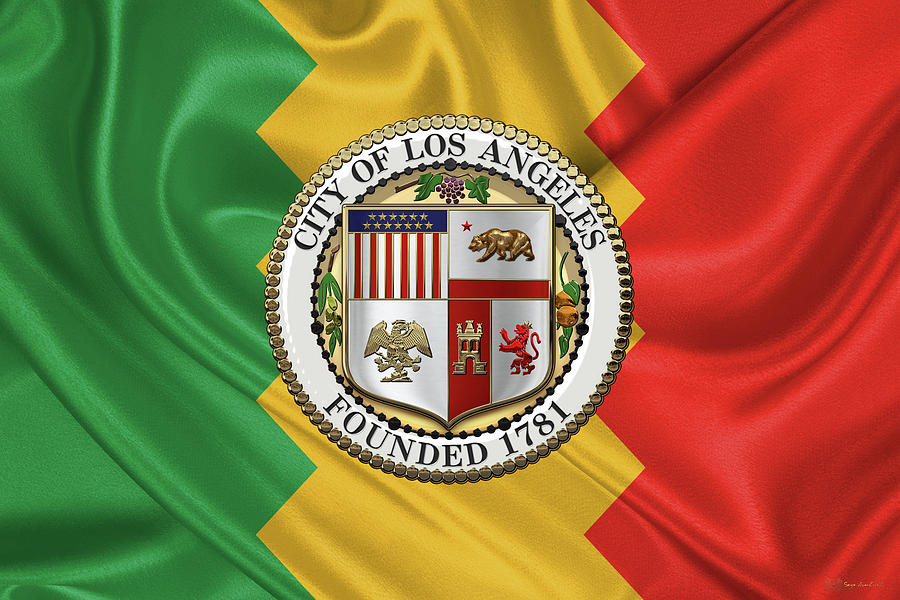
At first glance, the Los Angeles flag’s three vertical stripes may seem simple, but each color and arrangement carries significant meaning. The flag consists of three equally spaced stripes of green, gold, and red. These are not random choices; instead, they reflect distinct periods and influences that have shaped the city over time.
Green represents the Spanish heritage of Los Angeles. Long before it became part of the United States, Los Angeles was a Spanish settlement. Green acknowledges the lasting impact of Spanish culture, language, architecture, and early governance on the city. The prominence of green on the flag honors that formative era.
The gold stripe in the center symbolizes the period of Mexican rule, which followed Spain’s governance. Under Mexico, Los Angeles deepened its agricultural development and grew as a regional community. Gold is often seen as a color of prosperity, sunshine, and optimism—qualities that Los Angeles embraced as it continued expanding.
The red stripe recognizes Los Angeles within the context of the United States. Red stands for courage, strength, and the city’s role in the broader American narrative. Together with white in the city seal (placed on the central stripe), these colors reflect unity and the blending of heritage with ongoing civic development.
The City Seal: Placement and Meaning
At the heart of the Los Angeles flag lies the city seal, placed over the gold stripe. It is not merely decorative; it is a central component that brings together all of the flag’s symbolic elements. The seal contains a layered design with references to Los Angeles’ founders, governing forces, and aspirations.
The seal includes symbols such as the California bear, the United States flags, and heraldic elements from both Spanish and Mexican history. By placing it in the center, city leaders ensured that the flag would commemorate not just chronological periods, but also the unity of those historical narratives.
Interpreting the city seal requires attention to detail. It combines imagery of governance, settlement, and prosperity—each element representing a chapter in Los Angeles’ development. The seal is framed by the colors of the stripes so that the flag as a whole tells a story: from colonial beginnings to modern American metropolis.
This placement transforms the flag from a visual backdrop into a historical map. Residents and observers alike can trace the city’s journey from early settlement to diverse, modern urban community. It shows how Los Angeles honors its past while looking forward to its future.
Evolution Through Time: Changes and Proposals
Despite its long history, the Los Angeles flag has not been entirely static. Over the decades, artists, historians, and civic groups have proposed updates or reinterpretations of the design. These proposals often stem from changing perceptions of identity, cultural values, and artistic sensibilities.
Some suggestions have called for simplifying the flag to make it more visually striking, especially in a modern context where bold, minimalist flag designs are popular. Others have focused on better representing the city’s multicultural present—a population that includes vibrant communities from Asia, Africa, Latin America, and beyond.
While none of these proposals have replaced the existing flag, they have sparked important conversations about what civic symbols mean in a diverse society. They raise questions such as: Should a city flag reflect its current demographic makeup more explicitly? How can historical symbolism coexist with modern identity?
These discussions highlight the dynamism of civic symbols. A flag is not frozen in time—it lives in the minds and hearts of the people it represents. Proposals for change can reinforce pride, curiosity, and engagement with the symbols that signal what a community values.
Cultural Significance in the 21st Century
In the 21st century, the Los Angeles flag continues to hold cultural significance not just as a municipal emblem, but as an icon seen in everyday life. You’ll find the flag at city events, parades, and celebrations. It appears in school classrooms and on civic buildings. It even features in local art, fashion, and tattoos—especially among Angelenos who feel a deep connection to their city.
For many residents, the flag serves as a reminder of personal history and belonging. Los Angeles is a place where people come from many parts of the world, and the flag’s layered symbolism resonates with individuals who see their own stories reflected in the city’s narrative of change, growth, and diversity.
Cultural celebrations such as Indigenous Peoples’ Day, Cinco de Mayo, and Asian American Pacific Islander Heritage Month further demonstrate how the flag intersects with contemporary identities. It is not merely a static symbol; it is woven into the fabric of civic life. Residents proudly display it not only as a marker of geography, but also as a testimony to shared heritage and community pride.
This relevance in modern culture is a testament to the flag’s enduring strength as a symbol. It continues to remind people why they chose Los Angeles as home—or why they feel a connection to it that transcends physical location.
The Los Angeles Flag in Art, Pop Culture, and Media
Los Angeles is synonymous with creative expression, and the flag is no exception. Artists have incorporated its colors and symbols into murals, paintings, digital art, and street installations across the city. This artistic engagement reflects how civic symbols can thrive outside official contexts, taking on meanings shaped by community interpretation.
In popular culture, the flag has appeared in films, television shows, and music videos that portray Los Angeles as a backdrop for storytelling. Whether subtly in the background or intentionally featured in a scene, its presence signals location, identity, and narrative authenticity.
Musicians and performers from Los Angeles have also drawn inspiration from the flag. From album art to stage design, elements of the flag have appeared in works by local artists, affirming its cultural resonance. When seen in performance spaces or promotional visuals, the flag becomes part of the dialogue between art, place, and audience.
Through media and artistic representation, the Los Angeles flag lives on not only as a civic emblem but as a cultural motif. Its influence expands beyond government buildings to shape how people around the world visualize and imagine Los Angeles.
Flag Etiquette and Civic Protocol
Like all flags, the Los Angeles flag has a set of etiquette guidelines that govern how it should be displayed and respected. These protocols help maintain the dignity of the symbol and ensure that it is treated with the respect due to an emblem of civic identity.
Officially, the Los Angeles flag should be flown on government buildings, at city events, and in conjunction with the United States and California flags. There are established rules about order of precedence, lighting at night, and protocols during times of mourning or remembrance.
While everyday residents may not memorize these rules, there is a broad expectation that a civic flag should be treated honorably. Learning about etiquette can strengthen one’s appreciation for the flag and encourage thoughtful display whether at home, in public spaces, or at community events.
Respecting flag protocol also underscores the broader importance of civic symbols. They represent collective values and shared identity, and handling them with respect reflects a deeper connection to the community they represent.
Comparisons with Other City Flags
City flags across the United States vary greatly in design, symbolism, and popularity. Some are widely recognized and beloved, while others are rarely seen outside official documents. When compared to other city flags, Los Angeles’ emblem stands out for its rich historical references and layered meanings.
For example, the flag of Chicago is often cited as one of the most iconic municipal flags, with its bold geometric design and easily recognizable stars. Los Angeles’ flag, by contrast, relies on historical symbolism and a more complex city seal. Each approach reflects different values—Chicago’s straightforward visual language versus Los Angeles’ narrative depth.
Looking at other city flags around the world, we notice a spectrum of design styles, from simple color fields to elaborate heraldry. The Los Angeles flag falls into the tradition of historical narrative symbols rather than minimalist modernist design. This gives it a distinct character—one that tells a story of time, influence, and community evolution.
Understanding these comparisons deepens appreciation for civic design and how cities choose to express themselves visually. The Los Angeles flag may not be the simplest, but its history and meaning set it apart as a richly symbolic icon.
Why the Flag Still Matters Today
Some might question the relevance of a municipal flag in a world dominated by global brands, digital identities, and transient relocations. Yet the Los Angeles flag continues to matter because it gives shape to civic belonging. It reminds people that identity is not only personal—it is also collective.
In a city as large and diverse as Los Angeles, symbols that can unify people across backgrounds are vital. The flag, with its layered meaning, functions as such a symbol. It acknowledges different historical chapters while inviting everyone to see themselves as part of the present and future community.
Moreover, civic symbols like the Los Angeles flag encourage engagement. They prompt questions: What does our city stand for? Where did we come from? Who are we today? These questions enrich public dialogue, heightening awareness of how shared identity evolves over time.
Ultimately, the flag matters because it gives people a sense of place—a visual statement that connects history, culture, and community in a single emblem.
How Residents Connect With the Flag Today
For many Angelenos, the flag is more than a formal symbol; it is part of daily life. Local artists incorporate it into murals and creative projects. Schools use it as a teaching tool for history and civic understanding. Community organizations display it at festivals, parades, and celebrations.
Residents who take pride in their city may adorn their homes, cars, or clothing with flag colors or symbols. Social media posts often feature the flag during local events or holidays. Such expressions create a living, evolving relationship between the symbol and the people it represents.
This connection is not purely decorative—it carries emotional significance. The flag represents identity, belonging, and shared experience. For people who have lived in Los Angeles for generations, it may evoke family history. For newcomers, it may signify welcome and inclusion. In both cases, the flag bridges personal stories with collective identity.
In this way, the flag remains relevant not because it is required by law, but because people choose to embrace it as a meaningful part of their civic experience.
Future Possibilities for the Los Angeles Flag
Looking forward, it remains possible that future generations will revisit the design of the Los Angeles flag. Changes in cultural perspectives, creative movements, and civic priorities may fuel new proposals or reinterpretations.
However, any future revision will face the challenge of balancing heritage with modern representation. How does one honor centuries of history while making a symbol that feels inclusive and relevant to today’s diverse population? This question will likely shape discussions about the flag for years to come.
Whether the flag changes or remains the same, the conversation itself is telling. It reveals a community that cares about how it is represented and how its story is told. Such engagement with civic symbols speaks to the ongoing evolution of identity, memory, and belonging in Los Angeles.
In essence, the future of the flag lies not just in design, but in the continued dialogue it inspires among residents, artists, historians, and community leaders.
Conclusion
The Los Angeles flag is far more than a decorative banner; it is a living emblem that brings together history, culture, identity, and community pride. From its origins in the early 20th century to its presence in modern art, media, and daily life, the flag reflects the vibrant, multi‑layered city it represents.
Understanding its colors, symbols, and historical references allows us to appreciate not just a piece of fabric, but the narrative of a place where diverse voices have shaped collective meaning. Whether displayed on government buildings, integrated into cultural events, or celebrated in artistic expression, the flag continues to be a meaningful marker of Los Angeles’ past, present, and future.
FAQs
What do the colors of the Los Angeles flag represent?
Green represents Spanish heritage, gold symbolizes Mexican rule, and red acknowledges the city’s place within the United States.
Why is the city seal in the center of the Los Angeles flag?
It reflects the city’s historical narrative and brings together symbols from different eras of Los Angeles history.
Has the Los Angeles flag ever changed since it was adopted?
No significant official change has been made, though proposals for redesign have been discussed.
Where is the Los Angeles flag commonly displayed?
It is prominently displayed on civic buildings, at events, schools, and cultural celebrations.
Does the Los Angeles flag have official etiquette rules?
Yes, there are guidelines for display, order of precedence, and respectful handling.
Also read:Port Salut Cheese: A Complete Expert Guide to France’s Famous Semi-Soft Classic