
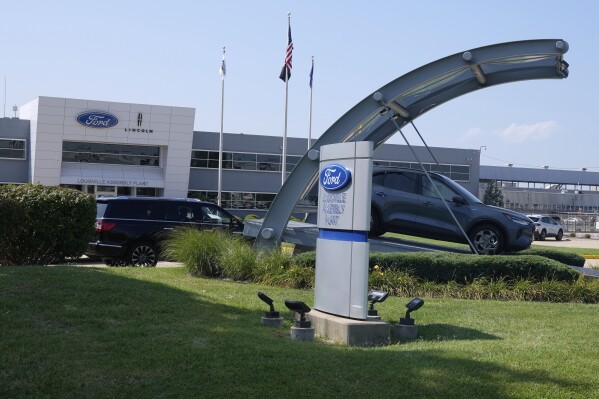
The Ford Louisville Assembly Plant is one of the most iconic and enduring symbols of American automotive manufacturing. Situated in Louisville, Kentucky, this facility has grown from humble beginnings into a modern industrial powerhouse that produces vehicles for Americans and reflects decades of innovation, resilience, workforce evolution, and automotive excellence. To understand the importance of the Ford Louisville Assembly, we must look at its origins, its evolution over time, how it helped shape the local economy and automotive industry, and the modern transformation it is undergoing today as the automotive world heads toward electric vehicles.
The Origins: Plant Beginnings and Industrial Roots
Ford’s presence in Louisville began as early as 1913, just a decade after automobile production began in Detroit. In that year, Ford opened a small assembly operation and sales office on South Third Street. This early endeavor was part of Henry Ford’s strategy to bring car production closer to customers, reduce delivery times, and minimize costs. That bold vision laid the foundation for a long-lasting relationship between Ford and the local community.
By 1916, Ford operated a larger four-story assembly plant located at Third & Eastern Parkway. This facility assembled vehicles in increasing quantities as demand for the Model T — the car that put America on wheels — continued to rise. At that time, the assembly line concept was revolutionizing vehicle production. Workers in Louisville were part of a transformation that would define modern manufacturing across the country.
As the 1920s progressed and industrial demand grew, Ford relocated operations in Louisville to a modernized one-level assembly plant on Southwestern Parkway near the Ohio River. This relocation marked a commitment to expand manufacturing capacity in the Southeast and took advantage of improved transportation logistics, including access to waterways and rail lines. This decision helped establish Louisville as a strategic location for automobile production in the region.
The Modern Plant Opens: Fern Valley Road and the Big Move
The most significant milestone in Ford Louisville Assembly’s history came in 1955 with the opening of the current plant on Fern Valley Road. This was not merely a relocation; it was a bold upgrade into a more advanced facility designed to accommodate a dramatically expanding lineup of vehicles. The Fern Valley plant became the central hub for Ford’s vehicle production in Louisville and represented a long-term commitment to the city and region.
During its early years, the Fern Valley plant produced a wide variety of vehicles, including many popular lines from the 1950s. When Ford decided to consolidate production at this modern site, it signaled a shift toward long-term presence and importance in the region. This period marked the plant’s transition from traditional passenger car production to the introduction of trucks and other versatile vehicles.
The plant also built vehicles under the Edsel brand between 1957 and 1959. Although the Edsel itself became known as a marketing failure, it remains an important chapter in Louisville’s automotive production history. Around two-thirds of all Edsels were assembled here, and the facility also produced heavy trucks and full-size passenger cars on separate lines, demonstrating the plant’s flexibility and capacity to handle diverse vehicle models.
Expansion and Diversification: 1960s–1980s
The 1960s and 1970s represented a period of growth and diversification for the Louisville Assembly Plant. As consumer tastes changed, Ford adapted its production to meet new market demands. Heavy truck production eventually moved in 1969 to the newly created Kentucky Truck Plant, allowing Fern Valley Road to focus more on passenger cars and lighter vehicles. This specialization improved production efficiency and overall output.
The introduction of light-duty trucks like the F-Series in 1973 made Louisville Assembly a major player in pickup truck manufacturing. These vehicles became incredibly popular as Americans sought versatile vehicles for both work and personal use. Louisville’s workforce developed a reputation for skill and adaptability as demand for pickups and domestic cars surged throughout the decade.
In the early 1980s, the plant underwent a temporary shutdown for retooling to build the Ford Ranger compact pickup and the Ford Bronco II SUV. When production resumed in 1982, it marked a new era of smaller, versatile vehicles tailored for customers who desired both utility and everyday usability. The Ranger and Bronco II helped define the compact truck and SUV segments for decades to come.
SUV Dominance and Economic Impact in the 1990s–2000s
The 1990s brought a dramatic shift in the automotive landscape with the rise of SUVs. The Ford Explorer, which began production at Louisville Assembly in 1990, became one of the key drivers of this trend. The Explorer offered a combination of utility, performance, and everyday practicality, quickly becoming one of Ford’s most successful products.
Alongside the Explorer, the plant produced the Mercury Mountaineer, a close cousin of the Explorer. These vehicles dominated the SUV market throughout the 1990s and early 2000s, as Americans increasingly sought elevated ride height, cargo capacity, and versatile performance. For Louisville, this translated into economic growth, job security, and a strong reputation as a hub for automotive manufacturing.
During this era, Louisville Assembly was notable for its ability to assemble multiple vehicle models simultaneously. This logistical and engineering achievement allowed the plant to produce hundreds of thousands of vehicles annually. The skilled workforce was essential to meeting the growing demands, maintaining high quality, and supporting both local and national economic growth.
Modern Production: Ford Escape and Lincoln Corsair Era
In the 2010s, production at Louisville Assembly shifted dramatically. Following the end of Ford Explorer and Mountaineer production, the plant was retooled and relaunched to produce the Ford Escape and Lincoln Corsair, reflecting the growing popularity of compact SUVs and crossovers.
The Escape became one of Ford’s most prolific vehicles globally, known for its balance of fuel efficiency, size, versatility, and everyday utility. The Lincoln Corsair offered a premium version of this formula, blending luxury features with refined performance. These models highlighted Louisville Assembly’s continued relevance and adaptability in an evolving automotive market.
By the mid-2020s, the plant was producing hundreds of thousands of these vehicles annually, demonstrating its manufacturing capacity and strong consumer appeal. The workforce continued to excel at high-volume production while ensuring quality standards remained at the forefront of operations.
Investments, Modernization, and Production Capacity
Ford has consistently invested in modernizing the Louisville Assembly Plant to improve performance, quality control, and flexibility. In 2010, the company invested over $600 million to transform the plant into a state-of-the-art operation emphasizing high production volume and adaptability. Later investments brought in new technology, robotics, and advanced quality validation centers.
In 2019, Ford committed an additional $550 million to upgrade the plant for future model production. This included new equipment, automation systems, and enhanced assembly capabilities. These investments ensure that the Louisville Assembly Plant remains competitive and ready to meet evolving market demands, from conventional vehicles to electric models.
The modern facility now combines traditional assembly techniques with advanced robotics and automation, allowing for greater efficiency and precision. This modernization also positions Louisville to respond quickly to changing consumer trends, new vehicle designs, and industry-wide shifts toward sustainable transportation.
Workforce and Community Impact
The Louisville Assembly Plant has long been a cornerstone of employment and economic growth in the region. Thousands of hourly and salaried workers, many represented by the United Auto Workers union, operate world-class assembly lines, quality inspection systems, robotics, and logistics networks that ensure vehicle production remains efficient and reliable.
The plant’s influence extends beyond the assembly line. It supports the local economy through job creation, supplier networks, regional spending, and community engagement. Secondary industries, including metal fabrication, parts suppliers, transportation logistics, and service providers, all benefit from Ford’s presence. This creates a ripple effect that supports tens of thousands of indirect jobs in the Louisville area.
Moreover, the plant has historically invested in workforce development, training programs, and local initiatives that enhance skills and promote long-term employment opportunities. This commitment strengthens both the plant and the broader community.
Supply Chain Challenges and Operational Hurdles
Like all large manufacturers, Ford has faced supply chain challenges at Louisville Assembly. Parts shortages have occasionally disrupted production, leading to temporary shutdowns affecting thousands of workers. These interruptions underscore the complexity of modern automotive manufacturing and the importance of resilient supply chain management.
Despite these challenges, the plant has consistently demonstrated resilience. Coordinated efforts among management, suppliers, and workers allow production to resume quickly after disruptions. The ability to adapt to unforeseen circumstances is a hallmark of Louisville Assembly’s operations, ensuring long-term reliability and output.
The experience gained through these challenges has allowed the plant to implement more robust inventory management systems, enhanced supplier communication, and proactive contingency planning, which strengthens its overall operational performance.
The Future: Electrification and Next-Gen Production
The most transformative chapter in Louisville Assembly’s history is underway: its shift toward electric vehicle production. Ford has committed significant investments to retrofit the plant for a new generation of electric vehicles, including an affordable electric midsize pickup truck slated for production in the coming years.
This transition involves upgrading assembly lines, incorporating advanced manufacturing systems, and expanding the plant’s footprint to accommodate next-generation EV models. The facility will employ innovative assembly techniques, including flexible subassembly lines that feed into a central production trunk, optimizing efficiency and reducing complexity.
The electrification of Louisville Assembly represents a fundamental reinvention of vehicle production. It marks the end of an era dominated by internal-combustion engines and the beginning of a sustainable future in automotive manufacturing. The plant will continue to be a vital contributor to domestic manufacturing, workforce development, and technological innovation.
Global Reach and American Manufacturing Identity
Louisville Assembly is not only a local facility; it is an integral part of Ford’s global manufacturing network. Vehicles produced here reach markets across North America and beyond, representing American engineering and industrial capability. The plant’s legacy reflects the evolution of manufacturing in the United States and its role in shaping global automotive standards.
From the Model T to electric vehicles, Louisville Assembly has been at the forefront of innovation, resilience, and production excellence. Its history is a testament to the dedication of workers, the foresight of management, and the adaptability of the facility to meet changing market demands. The plant continues to symbolize the strength and ingenuity of American manufacturing.
Frequently Asked Questions
What does the Ford Louisville Assembly Plant produce?
It currently produces vehicles such as the Ford Escape and Lincoln Corsair, with plans for electric trucks in the near future.
When did the Louisville Assembly Plant originally open?
The current Louisville Assembly Plant opened in 1955.
How much is Ford investing in the plant’s EV transformation?
Ford is investing approximately $2 billion to retrofit the plant for electric vehicle production.
How many workers does the Louisville Assembly Plant employ?
It employs several thousand workers, including both hourly and salaried employees.
What is the new assembly system for electric vehicles?
It is a flexible production system using subassembly lines feeding into a central trunk to optimize efficiency.
Why is Louisville important to Ford’s manufacturing operations?
It has been a long-standing plant with flexible production, skilled workforce, and strong regional impact.
What was one of the most famous vehicles produced there?
The Ford Explorer SUV was one of the most iconic models produced at Louisville Assembly.
Also read:Small Dead Animals: Understanding Their Role in Nature, Science, and Everyday Life