Agate rock is one of those natural wonders that manages to be both scientifically fascinating and visually breathtaking. Even if you’ve never studied geology, chances are you’ve seen polished agate slices used in jewelry, tabletops, bookends, or decorative art. Those mesmerizing bands of color don’t just happen by accident—they are the result of millions of years of geological processes working together with precision and patience.
What makes agate truly special is its balance between beauty and durability. It’s tough enough to survive harsh environmental conditions, yet intricate enough to display patterns that look almost painted by hand. Because of this unique combination, agate has captured human attention for thousands of years, appearing in ancient artifacts, spiritual tools, and modern design trends alike.
In this comprehensive guide, we’ll explore everything you need to know about agate rock—from how it forms deep inside volcanic cavities to how collectors identify rare specimens. Whether you’re a beginner curious about gemstones or someone looking to deepen your knowledge, this article will walk you through the world of agate in a casual yet expert tone.
What Is Agate Rock?
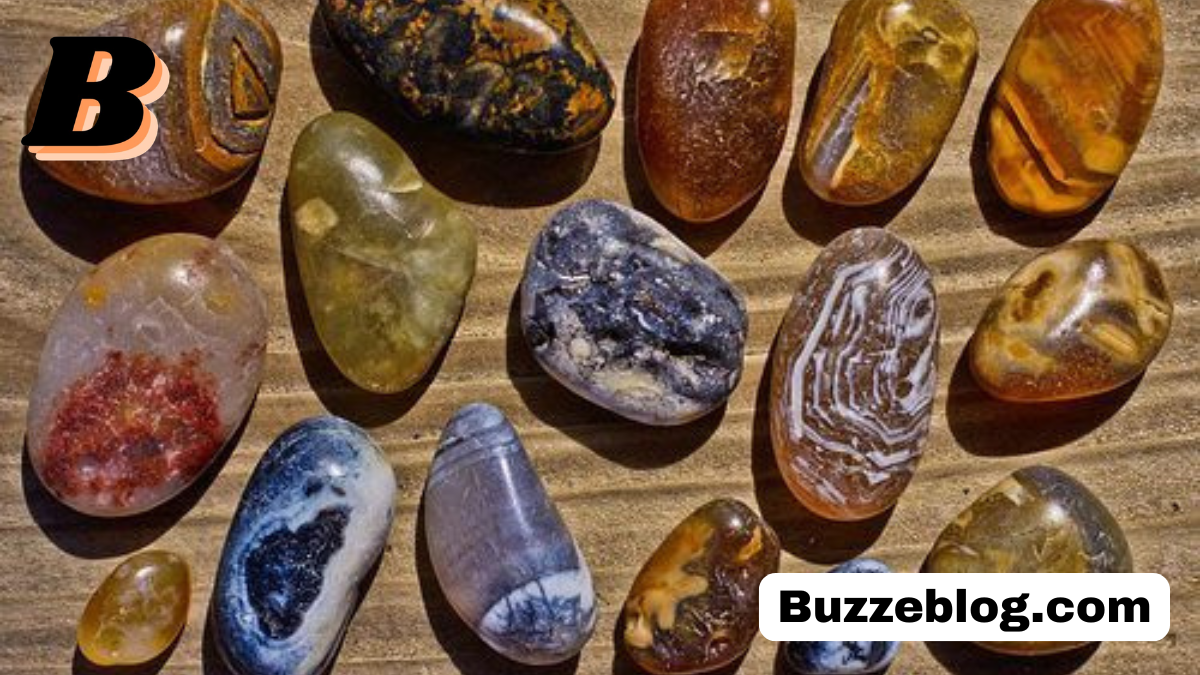
Agate is a variety of chalcedony, which itself belongs to the quartz family. At its core, agate is made of microscopic silica crystals that form in layers, producing the signature banded appearance people instantly recognize. Unlike transparent quartz, agate is typically translucent to opaque, and its colors can range from soft whites and grays to vivid blues, reds, and greens.
One of the defining characteristics of agate is its layered structure. These bands form as mineral-rich water seeps into cavities within volcanic rocks. Over time, silica deposits accumulate in thin layers, gradually building the patterns we admire today. Each layer represents a moment in geological history, making every agate stone a miniature time capsule.
Another interesting aspect is that no two agates are identical. Even stones found in the same region can look dramatically different. This uniqueness adds to their appeal for collectors and designers, who value agate not just as a mineral but as a natural work of art.
How Agate Rock Forms: A Geological Masterpiece
The formation of agate begins with volcanic activity. When lava cools, gas bubbles often get trapped inside the rock, creating hollow cavities. These empty spaces become the perfect environment for mineral-rich groundwater to circulate.
As groundwater flows through surrounding rocks, it dissolves silica and other trace minerals. When this solution enters the cavities, it begins depositing microscopic layers along the interior walls. Temperature changes, pressure variations, and chemical composition all influence the colors and patterns that develop.
This process doesn’t happen overnight—it can take millions of years. Layer after layer forms until the cavity is either completely filled or partially lined with crystalline structures. Sometimes, the center remains hollow and later grows quartz crystals, resulting in a stunning geode.
What’s particularly fascinating is how environmental changes affect banding. A shift in mineral concentration might create a darker stripe, while increased iron content could produce warm red or orange hues. Essentially, agate records geological events the way tree rings record climate history.
The History of Agate: A Stone Loved Across Civilizations
Agate has been appreciated since ancient times. Archaeologists have discovered agate artifacts dating back thousands of years, indicating that early civilizations recognized its beauty and durability long before modern science explained its origins.
In ancient Mesopotamia, agate was commonly used for seals and amulets. People believed it offered protection and strength, making it both decorative and symbolic. Similarly, ancient Egyptians carved agate into ornaments and ceremonial objects, often associating it with harmony and balance.
The Greeks and Romans also valued agate highly. In fact, the stone gets its name from the Achates River in Sicily, where it was historically found in abundance. Roman craftsmen were especially skilled at carving agate into cameos—detailed relief carvings that are still admired today.
During the Middle Ages, agate continued to be associated with healing and protection. Some cultures believed it could ward off storms or bring courage to warriors. Whether these beliefs were grounded in spirituality or tradition, they helped cement agate’s place in human culture.
Today, agate remains popular not because of superstition but because of its undeniable visual appeal and geological intrigue.
Types of Agate Rock You Should Know
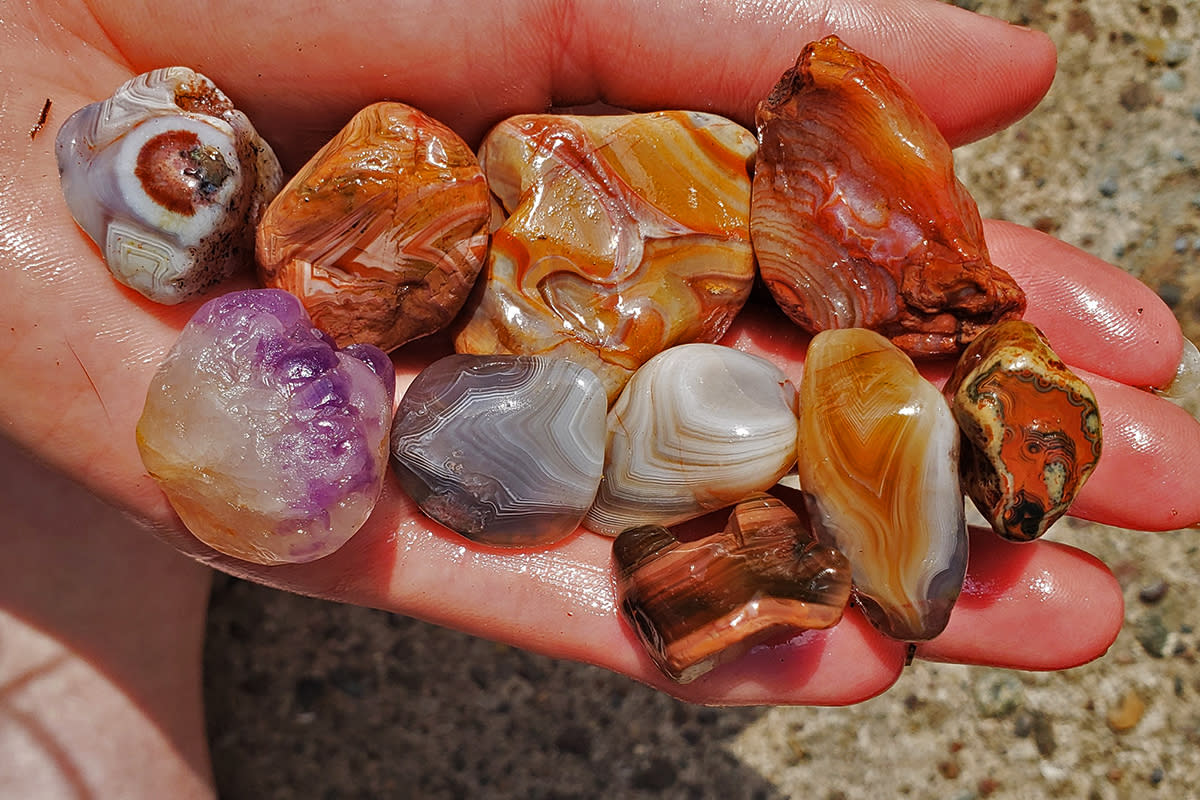
Agate isn’t just one stone—it’s a category with dozens of variations. Each type forms under slightly different conditions, resulting in distinctive appearances.
Banded Agate
This is the classic form most people imagine. It features parallel layers that can be sharply defined or softly blended. Colors often alternate between light and dark tones, creating a rhythmic visual effect.
Moss Agate
Instead of bands, moss agate contains green, brown, or black inclusions that resemble plants or underwater landscapes. Interestingly, these patterns aren’t organic—they’re caused by mineral impurities such as manganese or iron.
Fire Agate
Fire agate is famous for its iridescent glow. When light hits the stone, it produces flashes of gold, green, and red, almost like an opal. This effect comes from thin layers of iron oxide that refract light.
Blue Lace Agate
Known for its calming appearance, blue lace agate displays delicate blue and white bands that resemble flowing fabric. It’s particularly popular in jewelry because of its soft, elegant look.
Crazy Lace Agate
Sometimes called the “laughter stone,” crazy lace agate features swirling, chaotic patterns rather than straight lines. Its energetic design makes it a favorite among collectors seeking something visually dynamic.
Each type tells a different geological story, proving that agate is far more diverse than many people realize.
Where Agate Is Found Around the World
Agate deposits exist across the globe, but certain regions are especially famous for producing high-quality specimens.
Brazil is one of the largest suppliers of agate. Massive volcanic formations there have created ideal conditions for agate formation, leading to stones with vivid colors and dramatic banding.
Uruguay is another powerhouse in the agate world. Stones from this region are often deeply saturated, with intense blues and purples that stand out in the market.
The United States also has notable agate locations. States like Oregon, Montana, and Michigan attract rockhounds eager to search riverbeds and shorelines for hidden treasures. Lake Superior agates, for example, are highly prized for their rich red tones caused by iron.
Madagascar has gained attention in recent years for producing uniquely patterned agates, often with striking contrasts and unusual formations.
What’s fascinating is that geography influences appearance. Climate, mineral content, and volcanic history all play roles in shaping each stone.
Physical and Chemical Properties of Agate
From a scientific perspective, agate is as impressive as it is beautiful.
It ranks about 6.5 to 7 on the Mohs hardness scale, making it durable enough for everyday wear in jewelry. This hardness also explains why agate survives natural weathering processes better than many other minerals.
Chemically, agate is composed primarily of silicon dioxide (SiO₂). However, trace elements introduce the colors we see. Iron can create reds and oranges, chromium may produce greens, and titanium sometimes contributes to blues.
Agate also has a waxy luster when polished, giving it that smooth, almost glowing finish. Its fracture is typically conchoidal—meaning it breaks with curved surfaces similar to glass.
Another notable trait is its resistance to chemicals. Agate doesn’t easily react with household substances, which makes it relatively low maintenance.
Why Agate Colors Are So Diverse
Color variation is one of agate’s most captivating features. While the base material is typically colorless or gray, impurities transform it into a spectrum of shades.
Iron oxides often produce warm hues like red, orange, and yellow. Stones exposed to different oxidation levels may shift in tone over time, deepening their color.
Manganese can introduce pinks and purples, while copper sometimes contributes greenish tints. The concentration of these elements determines whether the color appears faint or vibrant.
Interestingly, some agates on the market are dyed to enhance their appearance. Bright blues and neon pinks are often signs of treatment. While dyed stones can still be beautiful, collectors usually prefer natural coloration.
Lighting also plays a role in perception. A stone that looks muted indoors might glow when sunlight passes through its translucent layers.
Agate in Jewelry and Decorative Design
Agate’s durability and visual appeal make it a favorite among designers. From minimalist pendants to bold statement pieces, the stone adapts to almost any style.
Jewelry makers appreciate that agate can be cut into various shapes without losing structural integrity. Cabochons—smooth, rounded stones—are especially popular because they highlight the internal patterns.
Beyond jewelry, agate appears in home décor. Polished slices are often used as coasters, wall art, or tabletops. When backlit, they create a dramatic effect that instantly elevates a space.
Bookends carved from agate geodes combine practicality with artistry. Even small decorative bowls showcase the stone’s layered beauty.
Because every piece is unique, incorporating agate into design adds a sense of exclusivity that mass-produced materials simply can’t match.
Metaphysical Beliefs and Symbolism
Although science explains how agate forms, many people are drawn to its symbolic meanings.
Historically, agate has been associated with stability and grounding. Some believe it helps balance emotional energy, promoting calmness during stressful times.
Others view it as a stone of protection. Ancient travelers reportedly carried agate to guard against danger.
In modern crystal practices, different varieties are linked to specific intentions. Blue lace agate is often connected with communication, while moss agate is thought to encourage growth and renewal.
Whether you see these beliefs as spiritual truth or cultural tradition, they highlight the deep emotional connection humans have developed with this stone.
How to Identify Real Agate
With so many stones on the market, knowing how to spot genuine agate is useful.
First, look for natural banding. Authentic agate typically shows irregular patterns rather than perfectly uniform lines.
Second, check the temperature. Real stone feels cool to the touch, whereas plastic imitations warm quickly.
Weight is another clue. Agate is relatively dense, so it should feel heavier than it looks.
You can also examine translucency by holding the stone up to light. Many agates allow some light through, revealing hidden layers.
If the color appears unusually bright, consider the possibility of dyeing. This isn’t necessarily bad—but transparency about treatments matters when purchasing.
Caring for Agate Rock
One of the best things about agate is how easy it is to maintain.
Cleaning usually requires nothing more than warm water, mild soap, and a soft cloth. Avoid harsh chemicals, as they may damage the polish over time.
While agate is tough, it’s still wise to store it separately from harder gemstones like diamonds to prevent scratches.
If you own agate jewelry, remove it before heavy physical activity. Sudden impacts could cause chips.
Occasionally polishing the stone with a microfiber cloth helps preserve its shine.
With minimal care, agate can last for generations—making it both a decorative and heirloom-worthy material.
Collecting Agate: Tips for Beginners
Starting an agate collection can be incredibly rewarding. The thrill of finding a stone with exceptional patterns never really fades.
Begin by learning about regional varieties. Understanding what your area offers helps you recognize valuable specimens.
Attend gem shows or join rockhounding groups to expand your knowledge. Experienced collectors often share insights you won’t find in books.
Focus on quality rather than quantity. A single striking agate is often more satisfying than dozens of average stones.
Finally, trust your taste. While market value matters, personal connection plays a huge role in collecting.
Industrial and Practical Uses of Agate
Beyond aesthetics, agate has practical applications thanks to its hardness and chemical resistance.
It’s commonly used to make mortar and pestles for laboratories because it doesn’t contaminate substances.
Precision instruments sometimes incorporate agate components to reduce friction.
In the past, agate was even used in certain machinery bearings due to its durability.
These functional roles remind us that agate isn’t just beautiful—it’s remarkably capable.
The Future of Agate in Modern Design
As natural materials gain popularity, agate continues to find its place in contemporary design.
Interior designers increasingly favor statement pieces made from stone, and agate fits perfectly into this trend. Its organic patterns contrast beautifully with sleek modern furniture.
Sustainability conversations are also influencing the gemstone market. Ethical sourcing and responsible mining practices are becoming more important to buyers.
Technology is expanding possibilities as well. Advanced cutting techniques allow artisans to reveal patterns that might have gone unnoticed in the past.
In many ways, agate bridges the gap between ancient craftsmanship and modern creativity.
FAQs
What is agate rock?
Agate is a banded variety of chalcedony formed from layered silica deposits inside volcanic rock cavities.
Is agate a valuable stone?
Most agates are affordable, but rare patterns and natural colors can significantly increase value.
Where can agate be found?
Agate occurs worldwide, with notable deposits in Brazil, Uruguay, the United States, and Madagascar.
How can you tell if agate is real?
Look for natural banding, cool temperature, noticeable weight, and slight translucency.
Is agate suitable for everyday jewelry?
Yes, its hardness makes it durable enough for regular wear with basic care.
Are brightly colored agates natural?
Some are natural, but extremely vivid colors often indicate dye treatment.
Does agate have healing properties?
Many cultures believe so, though these claims are spiritual rather than scientific.
Can agate get wet?
Yes, water won’t harm it, but harsh chemicals should be avoided.
Why are agates unique?
Each stone forms under different geological conditions, creating one-of-a-kind patterns.
Is agate a quartz?
Yes, it belongs to the quartz family and is composed mainly of silicon dioxide.
Also read: Byzantine Empire Flag: A Deep Exploration