Busiest U.S. Ports: A Comprehensive Deep Dive
The United States is a global trade powerhouse, and that status is due in massive part to its ports system. Ports serve as the physical gateways for goods moving in and out of the country, facilitating trillions of dollars in commerce every year. When people talk about the busiest U.S. ports, they are referring to the harbors and terminals that handle the highest volume of cargo annually, measured in terms of container traffic (usually TEUs), tonnage, and overall economic throughput. These ports touch virtually every industry—from retail and manufacturing to energy and agriculture. The busiest U.S. ports are vital economic assets that support jobs, enable trade partnerships worldwide, and make the everyday goods we depend on possible.
Understanding the roles, differences, and complexities of these major ports tells a story about both regional economic strength and global trade trends. Ports are not just places where ships pull up; they are intricate ecosystems involving logistics, transportation networks, labor forces, warehousing, technology, environmental considerations, and geopolitical influence. In this article, we will explore the busiest U.S. ports from multiple angles: how they operate, what makes them busy, their economic impact, how they compete and cooperate, current challenges, future trends, and their role in shaping American trade well into the future.
What Defines a “Busy” Port?
When we talk about the busiest U.S. ports, what do we actually mean? Busy can be defined in several ways, and the criteria matter. For example, some ports excel in handling the highest volume of containers—a primary metric in international trade. Containers are standardized boxes that can be moved easily between ships, trucks, and trains, and are measured in TEUs, or twenty‑foot equivalent units. Other ports may be leaders in bulk cargo tonnage, such as coal, grain, or crude oil, which are measured by sheer weight rather than container count.
Moreover, ports can also be evaluated by economic throughput, meaning the total value of goods that pass through their facilities. A port may handle fewer containers but those containers may be filled with high‑value electronics, luxury goods, or auto parts. Then there are combined metrics that include vessel calls, rail connectivity, trucking networks, warehousing capacity, and intermodal operations—how cargo moves seamlessly between water, road, and rail. All these factors paint different pictures of port activity.
In simple terms, however, when trade analysts, economists, and logistics professionals refer to the busiest ports, they are most often looking at the competitive rankings based on container volume (TEUs per year) and total cargo tonnage (in millions of tons). Those rankings provide clear data about which ports serve as critical thermometers of international commerce activity.
Busy ports tend to share common characteristics: excellent maritime access, sophisticated infrastructure capable of serving the largest ships, deep water channels, high‑capacity cranes, strong hinterland transportation networks, and efficient customs processing. They are hubs not only of trade but also of employment, innovation, and economic resilience. By exploring these metrics and what drives them, we can understand why certain U.S. ports consistently rank at the top.
Historical Growth of U.S. Ports
The busiest U.S. ports did not become global leaders overnight. Their rise was a long evolutionary process tied to economic growth, industrialization, war, policy decisions, and innovation. In the earliest decades of U.S. history, ports like New York and New Orleans gained prominence because they served as gateways for immigrants and goods into a young, expanding nation. Shipping routes were shorter then, and many goods were still moved in break‑bulk cargo rather than containers.
The transformation of ports accelerated after World War II. Returning soldiers, economic revival, and increasing global connectivity led to unprecedented trade expansion. The real turning point came in the 1950s and 1960s with the standardization of shipping containers. Malcolm McLean, a visionary in transportation, pioneered container shipping, which revolutionized the industry. Containers allowed goods to be packed once and moved efficiently between ships, trucks, and trains. This dramatically reduced loading times and costs.
The U.S. quickly adapted. Ports invested in container terminals, acquiring specialized cranes and redesigning cargo yards. Coastal cities with deep water access expanded their facilities. On the East Coast, ports like New York/New Jersey grew rapidly, while on the West Coast, ports like Los Angeles and Long Beach emerged as primary entry points for Asian trade. Meanwhile, Gulf Coast ports integrated into global commodity flows, with sugar, grain, and oil becoming significant export streams.
The expansion of intermodal rail also propelled port development. Railroads such as BNSF and Union Pacific built dedicated lines and terminals to connect inland markets to coastal hubs. Agricultural heartlands, industrial centers, and consumer markets became interlinked with seaports, giving rise to sprawling logistics networks.
Growth was not always steady. Economic downturns, trade disputes, oil crises, and changes in manufacturing hubs influenced port activity. For example, as manufacturing moved offshore in the late 20th century, imports surged, and ports adapted. Through every stage of change, the busiest U.S. ports demonstrated capacity for reinvention and investment, reinforcing their roles as linchpins of global commerce.
The Top Busiest U.S. Ports — Container Volume Leaders
America’s busiest ports by container volume are perhaps the most internationally recognized, as container trade directly reflects global supply chains. These ports are where massive container ships carrying goods from Asia, Europe, and Latin America arrive, unload, and dispatch cargo across the country.
Port of Los Angeles
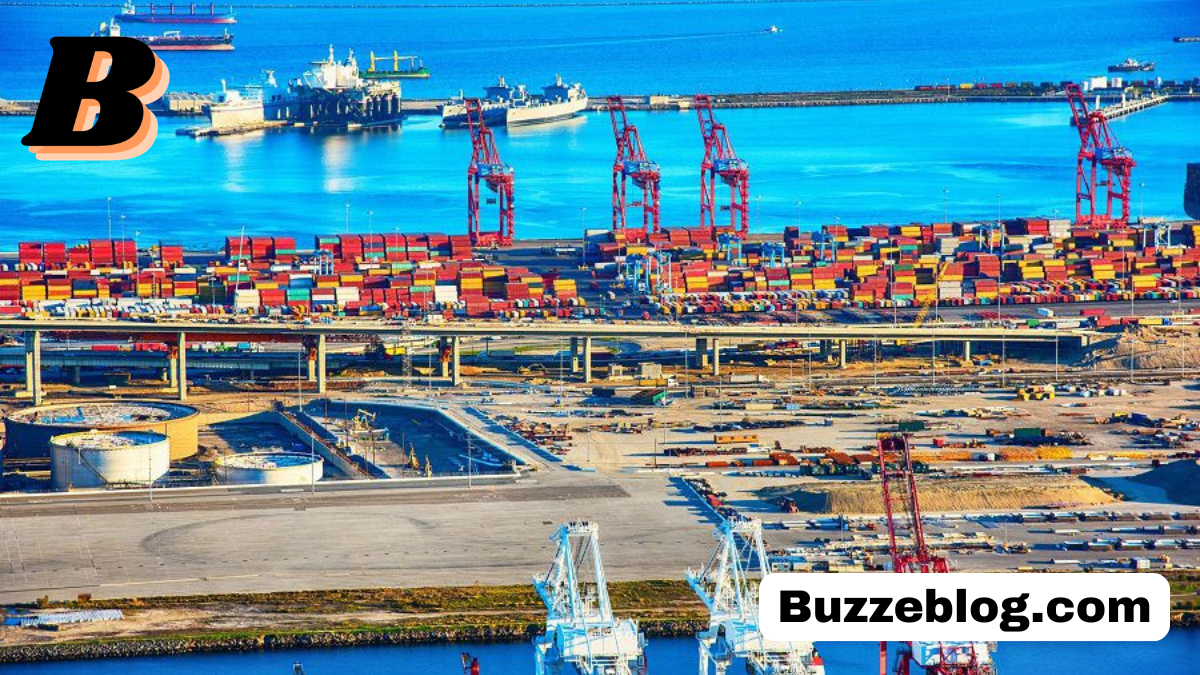
The Port of Los Angeles is widely acknowledged as the busiest in the United States in terms of container volume. Strategically located on the West Coast, adjacent to the city of Los Angeles, this port benefits from deep water, state‑of‑the‑art infrastructure, and proximity to some of the largest consumer markets in the country. With terminals equipped to handle the largest container ships afloat, the Port of Los Angeles consistently records the highest TEU figures annually.
This port’s success stems from several factors. First is its geographic advantage. Ships from Asia have a relatively direct route across the Pacific to Southern California. Second is its world‑class infrastructure, featuring advanced cranes capable of lifting the heaviest containers efficiently, computerized logistics systems, and extensive warehousing. Third is its connectivity — the port links directly to major interstate highways and railroads that carry goods to every corner of the United States.
The Port of Los Angeles also engages in continuous modernization. Expansion projects, dredging campaigns to deepen channels, and adoption of green technologies improve efficiency and sustainability. The port remains a focal point for trade policy discussions because activity there often reflects broader economic trends, such as consumer demand, manufacturing shifts, and international relations.
Port of Long Beach
Just south of the Port of Los Angeles is the Port of Long Beach, another global trade titan. Though smaller in area than its neighbor, Long Beach rivals Los Angeles in container movement and remains a critical node in U.S. supply chains. The close proximity of the two ports creates a combined Southern California port complex that handles a significant majority of Asia‑bound container traffic entering the country.
Long Beach distinguishes itself through innovation and efficiency. The port has invested heavily in automation, including remote‑controlled cranes and advanced terminal management systems that streamline cargo handling. These technologies reduce turnaround times and help maintain high throughput even during peak trade seasons.
Environmental stewardship is another hallmark of the Port of Long Beach. The port has implemented aggressive clean air programs, reducing emissions from ships, trucks, and cargo handling equipment. These efforts address both regulatory requirements and local community concerns while setting standards for ports worldwide.
Terminal operators and logistics companies operating at Long Beach benefit from seamless integration with rail carriers, enabling fast transfers to inland markets. The port’s strategic investments have ensured that it remains among the busiest and most efficient in the nation.
Port of New York and New Jersey
On the East Coast, the Port of New York and New Jersey stands as the busiest gateway for containerized goods entering the United States from Europe, the Mediterranean, and increasingly Asia via the Suez Canal route. As the largest port on the Atlantic Coast, it serves an enormous population base and a rich industrial region extending into the Midwest through rail connections.
Unlike the West Coast ports that primarily handle Asia‑Pacific trade, the Port of New York and New Jersey sees more diversified traffic. Imports include apparel, electronics, machinery, and consumer goods, while exports often involve agricultural products, raw materials, and manufactured goods.
A major factor in the port’s competitiveness has been infrastructure investment. Deepening of channels and modernization of terminals enable the accommodation of larger vessels. Rail projects improve freight movement, and coordinated customs procedures expedite cargo clearance. These enhancements have helped the port maintain robust growth despite global trade shifts and competition from other East Coast harbors.
The New York metropolitan area’s vast consumer market ensures high demand for goods moving through this port, and efficient road networks further distribute cargo throughout the Northeast and beyond.
Port of Savannah
The Port of Savannah, though younger in container traffic prominence than Los Angeles or New York, has surged in importance over the past two decades. Located in Georgia, this port benefits from significant investments in terminal expansions, cranes, and inland transportation connections.
Savannah’s proximity to major interstate highways, including I‑95 and I‑16, enables fast distribution to the Southeast and Midwest. In addition, rail connections provide access to inland markets. By offering competitive pricing, efficient operations, and strong customer service, the Port of Savannah has attracted major shipping lines and logistics providers, increasing its container volume tremendously.
Savannah’s growth reflects broader economic expansion in the Southeastern United States, where population growth, manufacturing investment, and logistics development have accelerated. The port’s ability to handle large volumes without the congestion sometimes experienced at larger West and East Coast ports has made it attractive to shippers seeking reliability.
Port of Houston
While Houston is often associated with energy and petrochemical exports, the Port of Houston also handles a significant share of container traffic. Houston’s strategic location near the Gulf of Mexico makes it an ideal point for trade with Latin America, Europe, and Asia via the Panama Canal. Its network of terminals handles containers as well as bulk and break‑bulk cargo.
Houston’s container volume has grown due to expansions in facilities, improvements in rail connectivity, and partnerships with major shipping companies. The port’s diverse cargo profile, including oilfield equipment, machinery, and agricultural products, differentiates it from ports that primarily handle retail imports.
In addition, Houston’s role as a global energy center attracts specialized cargo flows that complement its container business. Investments in technology and infrastructure continue to enhance efficiency, making the Port of Houston one of the busiest and most versatile in the country.
Major Busiest U.S. Ports by Cargo Tonnage

Container shipments are only one part of the commerce story. Some ports lead in sheer volume of cargo moved — including liquids, bulk grains, and raw materials. These ports are critical for industries that rely on large quantities of materials rather than containerized goods.
Port of South Louisiana
The Port of South Louisiana stretches along the Mississippi River between New Orleans and Baton Rouge. It is among the busiest ports in the Western Hemisphere when measured by total tonnage, handling a remarkable amount of bulk freight, including grain, coal, petroleum products, and chemicals. Because it lies along the Mississippi River, it provides a direct link between inland waterborne transportation and global maritime routes.
This port’s immense scale stems from its integration into U.S. industrial supply chains. Agricultural products from the Midwest travel downriver on barges to export terminals, while petroleum from Gulf refineries is shipped worldwide. The efficiency of river and rail connections amplifies the port’s role in national and international trade.
Unlike container ports that focus on standardized boxes, South Louisiana excels in handling bulk and break‑bulk shipments that require specialized infrastructure. Conveyors, storage domes, pipelines, and terminals designed for grain and oil streamline the movement of massive quantities of materials. Though its cargo may not make headlines the way consumer imports do, the economic impact of the Port of South Louisiana is enormous.
Port of Corpus Christi
Another port that stands out in tonnage is the Port of Corpus Christi in Texas. This port has grown rapidly as a major energy export hub, particularly for crude oil, liquefied petroleum gases, and other energy commodities. Corpus Christi’s strategic water depth, proximity to oilfields, and access to international shipping lanes have made it a powerhouse in the global energy trade.
Energy exports require specialized handling facilities such as pipelines, storage tanks, and safe transfer systems, and Corpus Christi has invested heavily in these assets. The port’s expansion projects have positioned it as a leading exporter of American energy. Combined with agricultural and industrial cargo flows, the Port of Corpus Christi consistently ranks among the busiest U.S. ports by tonnage.
Port of Beaumont
The Port of Beaumont in Texas may not be as well‑known internationally as Los Angeles or New York, but it plays a massive role in bulk cargo movement. Its location near the Gulf provides easy access to global markets, and its terminals handle a diverse mix of petroleum, chemical products, iron ore, coal, and agricultural goods.
The Beaumont port complex includes deep‑water berths, extensive storage facilities, and rail connections that integrate with national rail networks. This makes Beaumont an important hub for materials moving both for export and domestic industrial use. Its tonnage figures reflect the scale of heavy industry and energy trade in the region.
What Makes a Port Busy?
There is no single formula for becoming a busy port. Different ports thrive for different reasons, shaped by geography, investment, policy, market demand, and innovation.
Strategic Location
Geography is destiny in the world of ports. Ports located on major international shipping routes or near large consumer markets have built‑in advantages. For instance, West Coast ports are natural entry points for trans‑Pacific trade, while East Coast ports serve Atlantic routes from Europe and beyond. Gulf ports benefit from access to the Panama Canal and Latin America.
Additionally, ports that connect efficiently to inland transportation networks—especially railroads and interstate highways—can serve much wider markets. A port that can quickly move cargo hundreds or thousands of miles inland becomes more attractive to shippers.
Infrastructure and Technology
Modern infrastructure matters. Ports that invest in deep channels, high‑capacity cranes, computerized logistics systems, automated terminals, and large warehousing spaces are better positioned to handle high volumes. Technology helps reduce turnaround times and increase throughput, which in turn attracts more business.
Advanced terminals equipped for quick inspection, customs clearance, and freight consolidation further improve efficiency. Ports that lag in technology risk congestion, delays, and loss of competitiveness.
Rail and Truck Connectivity
Cargo doesn’t stop at the dock. A major reason why certain U.S. ports are busiest is because they integrate seamlessly with railroads and trucking networks. Rail lines carry goods over long distances at low cost, while trucks provide the last‑mile distribution to stores, factories, and warehouses.
Ports with dedicated rail terminals and direct access to major carriers enable faster cargo movement. For example, ports connected directly to Class I railroads such as Union Pacific or CSX can tap into national markets efficiently. This integrated intermodal system is a major driver of port activity.
Policy and Trade Agreements
Government policies, tariffs, and trade agreements influence port activity. For example, when trade agreements make it easier to import or export certain goods, activity at ports typically increases. Conversely, trade disputes or tariffs can reduce traffic and shift flows to other regions.
Customs procedures also play a role. Efficient clearance systems reduce bottlenecks, whereas delays in inspections can cause congestion. Ports that implement technology to expedite clearance often see more consistent flows and higher throughput.
Economic Drivers
Ultimately, cargo volume reflects economic activity. High consumer demand, strong manufacturing output, robust exports, and global supply chain demand all push traffic through ports. Ports located in economically vibrant regions or serving rapidly growing markets naturally handle more cargo.
Environmental and Community Challenges
Busy ports contribute significantly to national and regional economies, but they also bring environmental and community challenges. Heavy truck traffic, emissions from ships and cargo handling equipment, noise, and dredging activities can affect air quality and local ecosystems. As ports expand and become busier, these concerns intensify.
Many top ports now implement environmental programs aimed at reducing emissions and improving sustainability. For example, electrification of cargo equipment, shore power for docked vessels, and cleaner fuel incentives help lessen environmental impacts. Ports also partner with local communities to address quality of life concerns and invest in infrastructure that reduces congestion and pollution.
Balancing economic growth with environmental stewardship is a priority for modern ports. Stakeholders, from port authorities and labor unions to environmental groups and governments, collaborate on long‑term solutions that support commerce without compromising local health and ecosystems.
Labor, Workforce, and Human Capital
Behind every busy port is a large workforce. Dockworkers, crane operators, logistics planners, truck drivers, rail crews, customs officials, maintenance teams, and administrators together make port operations possible. Labor relations at ports have historical significance and ongoing importance. Strikes, contract negotiations, and workforce training impact productivity and timelines.
Port authorities and terminal operators often work with unions to ensure fair wages, safe working conditions, and workforce stability. Skill development programs prepare workers for increasingly technical jobs, especially as automation becomes more prevalent.
While automation improves efficiency, it also raises questions about job displacement. Many ports balance technological implementation with workforce development, emphasizing reskilling and new task opportunities.
Technological Innovation at Ports
Technology is reshaping how busy ports operate. From automated cranes and guided vehicles to blockchain‑powered cargo tracking and artificial intelligence optimizing logistics flows, innovation is transforming port efficiency.
Automated terminals reduce human error and increase throughput. Sensors track cargo movements in real time. Predictive analytics help ports anticipate surges in demand, vessel traffic, or equipment needs. Blockchain systems improve transparency across supply chains, enabling secure, tamper‑proof records that speed up customs and reduce disputes.
Smart ports leverage data analytics to optimize every aspect of operations, from berth scheduling to yard management. These technologies reduce turnaround times, cut costs, and attract more shipping lines seeking reliability.
The Impact of Global Events
The busiest U.S. ports do not operate in isolation; they are deeply interconnected with global events. Trade wars, pandemics, economic recessions, and shifts in manufacturing hubs directly affect port activity.
For example, the COVID‑19 pandemic disrupted global supply chains, causing congestion, labor shortages, and delays at ports worldwide. The ripple effects were felt in the United States, where backlog at major ports led to reevaluation of logistics practices, inventory management, and capacity planning. Ports responded by adjusting hours, expanding facilities, and coordinating more closely with carriers and inland transport.
Geo‑political tensions, such as shifting trade policies between the U.S., China, Europe, and other partners, influence cargo flows. Tariffs and sanctions can redirect shipments to alternative routes, temporarily increasing traffic at some ports while decreasing it at others.
Ports that adapt quickly to changing global conditions maintain competitiveness. Resilient infrastructure, diversified markets, and agile planning help busiest U.S. ports weather unpredictable global trends.
Future Trends and What’s Next
The future of the busiest U.S. ports will be shaped by technology, environmental priorities, global trade dynamics, and investments in infrastructure and workforce development.
Electrification and sustainability efforts will grow as ports reduce carbon footprints. Autonomous equipment and digitalization will accelerate, optimizing operations and enabling faster cargo movement.
Intermodal connectivity will expand, with greater integration between ports, railroads, and inland terminals. Distributed logistics hubs may emerge closer to major markets, easing pressure on coastal ports while facilitating quicker delivery.
Global trade patterns may diversify as manufacturing shifts, new free trade agreements are negotiated, and regions such as Africa and Southeast Asia experience economic growth. U.S. ports that cultivate relationships with emerging markets and adopt flexible strategies will continue to thrive.
In the coming decades, the busiest U.S. ports will likely be those that combine infrastructure excellence, investment in people, environmental responsibility, technological innovation, and strategic vision. They will remain essential to global commerce and national prosperity.
Conclusion
The busiest U.S. ports are more than just dockyards; they are dynamic engines of economic activity linking the nation to the world. From the sprawling container terminals of Los Angeles and Long Beach to the bulk cargo giants on the Gulf Coast, these ports support trade, jobs, industry, and consumer markets.
What makes a port busy is not just geography, but the complex interplay of infrastructure, technology, workforce, policy, and global demand. Busy ports are continually investing, innovating, and adapting to new realities. They face challenges from environmental impacts to shifting economic trends, yet they remain central to the flow of goods that shape our daily lives.
For students of economics, supply chain professionals, policymakers, and curious readers alike, understanding the busiest U.S. ports provides insight into how America moves goods, creates value, and connects to the global market.
FAQs
What determines how busy a port is?
A port’s traffic is determined by container and cargo volume, connectivity, infrastructure, and economic demand.
Which port is the busiest in the U.S. by container volume?
The Port of Los Angeles is the busiest by container volume most years.
Do the busiest ports only handle containers?
No, many busy ports also handle bulk, break‑bulk, and liquid cargo.
Why do ports invest in automation and technology?
To improve efficiency, reduce costs, and handle greater cargo volumes.
How do ports impact local economies?
They create jobs, support industries, and generate significant economic activity.
Also read: Exploring Small Cayman Island: A Complete Expert Guide to the Cayman Islands’ Charming Gem