Introduction to the False Albacore Fish
The false albacore fish is one of the most exciting and powerful fish species found in coastal waters. Known for its incredible speed, aggressive feeding habits, and strong fighting ability, this fish has gained a legendary reputation among anglers and marine enthusiasts. Despite its name, the false albacore is not actually a true albacore tuna. Instead, it belongs to a related group of fast-swimming fish that share similar physical features but have their own unique characteristics. Because of its energy and unpredictable movements, many fishermen consider catching a false albacore a thrilling challenge.
False albacore fish are commonly found in warm and temperate waters across the Atlantic Ocean. They often travel in large schools, hunting small baitfish near the surface. When these schools begin feeding, the water can erupt with splashes as the fish chase their prey. This behavior creates one of the most exciting sights in coastal fishing. Anglers often watch carefully for birds diving or fish breaking the surface, which are signs that a school of false albacore may be feeding nearby.
Another reason the false albacore fish attracts attention is its impressive strength. Even though it is not usually as large as some tuna species, it is known for putting up a powerful fight when hooked. Many anglers describe the experience as similar to hooking a small torpedo in the water. The fish can make long, fast runs that test both the fishing equipment and the skill of the person holding the rod. Because of this, the false albacore has become a favorite target for sport fishermen around the world.
Scientific Classification and Biological Identity
The false albacore fish is scientifically known as Euthynnus alletteratus. It belongs to the Scombridae family, which also includes tuna, mackerel, and bonito. Members of this family are known for their streamlined bodies, high swimming speeds, and strong muscles designed for long-distance movement through the ocean. The false albacore shares many of these traits, making it one of the fastest fish in coastal waters.
From a biological perspective, the false albacore is closely related to species such as the little tunny and the kawakawa. In fact, in many regions people use the name “little tunny” interchangeably with false albacore. Scientists classify it as a pelagic fish, meaning it spends most of its life swimming in the open ocean rather than staying near the bottom. This lifestyle requires a body designed for efficiency and endurance, which explains its torpedo-shaped appearance and strong tail.
One interesting aspect of the false albacore fish is its warm-blooded muscle system. Unlike many other fish species, certain tuna and tuna-like fish have specialized muscles that allow them to maintain higher body temperatures than the surrounding water. This adaptation helps them swim faster and hunt more effectively. While the false albacore is not fully warm-blooded like some larger tuna species, it still benefits from similar physiological advantages that enhance its speed and stamina.
Physical Appearance and Distinct Features
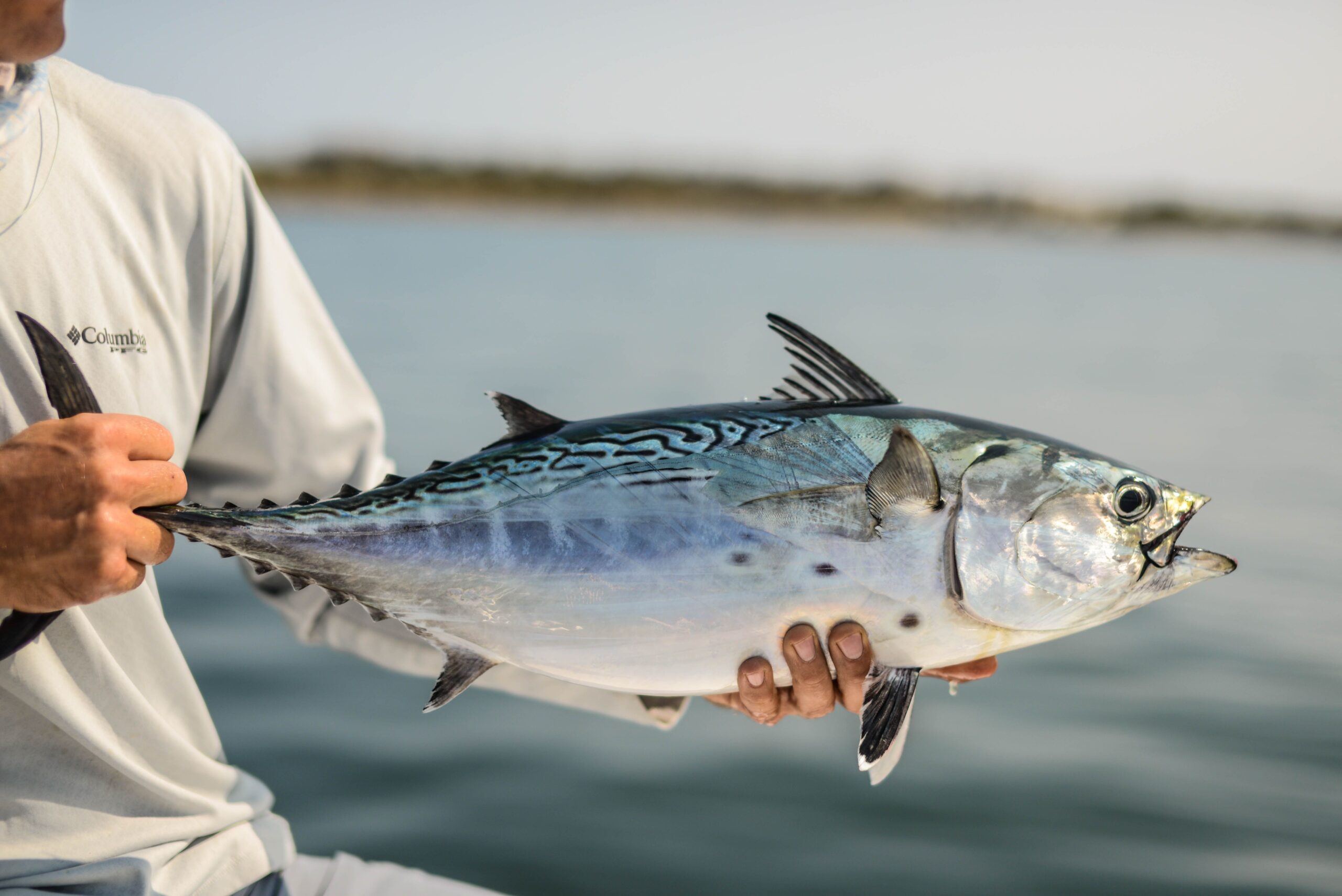
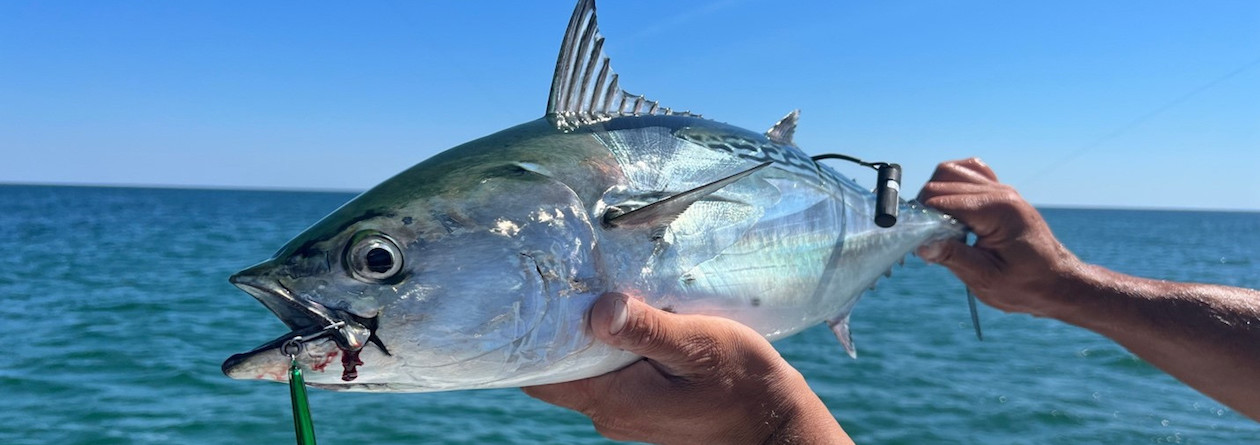
The false albacore fish has a sleek and streamlined body designed for speed. Its shape resembles a torpedo, with a narrow head, muscular midsection, and strong forked tail. This structure allows it to move through the water with very little resistance. The body is typically dark blue or green on the top and silvery on the sides, a coloration pattern that helps the fish blend into its surroundings and avoid predators.
One of the most recognizable features of the false albacore is the pattern of wavy lines and spots along its back. These markings help distinguish it from other tuna-like fish. Near the belly, small dark spots can often be seen between the pectoral and pelvic fins. These unique patterns make identification easier for fishermen and marine biologists who study pelagic species.
The fins of the false albacore are also adapted for speed and stability. The dorsal and anal fins are followed by several small finlets that reduce turbulence as the fish swims. Its tail is deeply forked and extremely powerful, enabling sudden bursts of speed when chasing prey. These physical characteristics make the false albacore one of the most efficient swimmers in the ocean.
Natural Habitat and Geographic Distribution
False albacore fish are widely distributed throughout the Atlantic Ocean and the Mediterranean Sea. They are commonly found along the eastern coast of North America, from New England down to the Gulf of Mexico. They also inhabit waters around Europe, West Africa, and parts of South America. This wide distribution shows how adaptable the species is to different marine environments.
The fish prefers warm and temperate coastal waters, particularly areas where baitfish are abundant. Estuaries, bays, and nearshore ocean zones are common feeding grounds for false albacore schools. During certain seasons, they migrate along the coast following the movement of prey species. This migration often brings them closer to shore, making them accessible to anglers fishing from boats, piers, or beaches.
Environmental factors such as water temperature, currents, and food availability strongly influence where false albacore fish are found. They are most active in waters ranging from about 60 to 80 degrees Fahrenheit. When conditions are ideal, large schools may gather in certain areas, creating incredible opportunities for fishing and wildlife observation.
Feeding Habits and Diet
False albacore fish are aggressive predators that feed primarily on small baitfish. Their diet commonly includes anchovies, sardines, menhaden, and small mackerel. They also eat squid, shrimp, and other small marine creatures when the opportunity arises. Because of their high energy levels and fast swimming speed, they require a diet rich in protein to sustain their active lifestyle.
One of the most exciting aspects of false albacore feeding behavior is the way they hunt in groups. Schools of these fish often work together to trap baitfish near the surface. As they attack the prey, the water becomes filled with splashes and flashes of silver as the baitfish try to escape. Seabirds frequently gather above these feeding frenzies, diving into the water to catch fish that are forced toward the surface.
This feeding style makes false albacore particularly interesting for anglers. When fishermen spot birds diving or fish breaking the surface, it often means a school of false albacore is actively feeding below. Quick casting and accurate lure presentation are usually necessary to catch them during these short but intense feeding periods.
Behavior and Swimming Speed
The false albacore fish is widely known for its incredible speed. Some estimates suggest that it can swim at speeds exceeding 40 miles per hour during short bursts. This remarkable speed allows it to chase fast-moving prey and avoid predators. Its powerful muscles and streamlined body make it perfectly adapted for rapid movement through the water.
Another interesting behavior of false albacore fish is their tendency to travel in large schools. These groups may consist of dozens or even hundreds of individuals. Swimming in schools provides several advantages, including protection from predators and improved efficiency when hunting for food. When one fish locates a school of baitfish, the rest of the group can quickly join the hunt.
False albacore also display seasonal movement patterns. In many regions, they migrate along the coast as water temperatures change throughout the year. During warmer months, they may move northward, while cooler temperatures often push them back toward southern waters. These migrations create predictable fishing seasons in many coastal areas.
Importance in Sport Fishing
Among recreational fishermen, the false albacore fish holds a special place as one of the most exciting sport fish available in coastal waters. Many anglers specifically target this species because of its speed and fighting ability. Even a medium-sized false albacore can provide a long and intense battle on light fishing gear.
One reason the fish is so challenging to catch is its cautious feeding behavior. False albacore often feed on very small baitfish, which means anglers must use equally small and realistic lures to attract them. Fly fishing for false albacore has become especially popular because it allows fishermen to present lightweight, lifelike baitfish patterns.
Another factor that adds to the excitement is the unpredictability of these fish. Schools may appear suddenly and disappear just as quickly. Anglers must remain alert and ready to cast at any moment. This fast-paced style of fishing creates a thrilling experience that keeps many fishermen coming back year after year.
Culinary Value and Edibility
Despite being a member of the tuna family, the false albacore fish is not widely considered a top table fish. Many anglers choose to release it after catching it because its meat can have a strong flavor and darker color compared to traditional tuna species. However, this does not mean the fish is inedible.
When handled and prepared properly, false albacore can actually be quite tasty. The key is to bleed the fish immediately after catching it and keep it cold until it is ready to be cooked. This process helps remove excess blood from the meat, improving its taste and texture.
Some chefs and experienced fishermen recommend preparing false albacore in dishes that use strong flavors or smoking techniques. Grilling, marinating, and making fish spreads are popular methods of cooking this species. With the right preparation, it can become a delicious and unique seafood option.
Conservation and Population Status
Currently, the false albacore fish is not considered an endangered species. Its population remains relatively stable across much of its natural range. However, like many marine species, it can still be affected by environmental changes, overfishing, and habitat disruption.
Conservation efforts often focus on protecting the ecosystems that support false albacore populations. Healthy populations of baitfish are essential for their survival, so maintaining balanced marine food chains is an important priority. Regulations on commercial fishing and sustainable practices also play a role in preserving this species.
Recreational anglers contribute to conservation by practicing catch-and-release fishing. By carefully handling the fish and returning it to the water quickly, fishermen can enjoy the thrill of the catch while helping maintain healthy populations for future generations.
Tips for Catching False Albacore Fish
Successfully catching false albacore fish requires skill, patience, and the right equipment. Light to medium spinning rods paired with strong reels are commonly used because they allow anglers to cast long distances while still handling the fish’s powerful runs. Braided fishing line is often preferred for its strength and sensitivity.
Lure selection is also extremely important. Small metal jigs, soft plastic baitfish imitations, and epoxy jigs are popular choices because they resemble the small prey that false albacore typically chase. Matching the size and color of local baitfish can significantly increase the chances of attracting a strike.
Timing and location are just as critical as equipment. Early morning and late afternoon are often the best times to find feeding fish. Watching for birds, surface splashes, or moving schools of baitfish can help anglers locate active false albacore quickly. Quick reactions and accurate casting can make the difference between success and missed opportunities.
Ecological Role in Marine Ecosystems
The false albacore fish plays an important role in the marine food web. As an active predator, it helps control populations of small baitfish and other marine organisms. By keeping these populations balanced, it contributes to the overall health of coastal ecosystems.
At the same time, false albacore also serves as prey for larger marine predators. Sharks, large tuna species, and marine mammals may feed on them when the opportunity arises. This position in the middle of the food chain makes the false albacore a key link between smaller and larger ocean species.
The presence of healthy false albacore populations often indicates a thriving marine environment. Their feeding activity can attract birds, dolphins, and other wildlife, creating vibrant ocean scenes that highlight the complexity of marine ecosystems.
The Unique Appeal of the False Albacore
There is something truly special about the false albacore fish that captures the attention of both scientists and fishermen. Its speed, strength, and striking appearance make it one of the most exciting fish in coastal waters. Watching a school of these fish chase baitfish across the surface can feel like witnessing a natural spectacle of speed and power.
For anglers, catching a false albacore is often considered a badge of honor. The challenge of locating the fish, presenting the right lure, and finally battling it on the line creates an unforgettable experience. Even experienced fishermen feel a rush of excitement when the drag on their reel begins to scream during a false albacore run.
Beyond fishing, the species also offers valuable insights into marine biology and ocean ecosystems. Studying its migration patterns, feeding behavior, and population dynamics helps scientists better understand how ocean environments function and how they can be protected for the future.
Conclusion
The false albacore fish is one of the most remarkable species found in coastal oceans. With its lightning-fast speed, aggressive feeding style, and powerful fighting ability, it has earned a legendary reputation among anglers and marine enthusiasts alike. Although it is sometimes overlooked compared to larger tuna species, its importance in sport fishing and marine ecosystems cannot be ignored.
From its scientific classification to its physical features and behavior, every aspect of the false albacore reflects a life built for speed and survival in the open ocean. Its ability to travel long distances, hunt in coordinated schools, and adapt to different marine environments demonstrates the incredible resilience of this species.
Whether you are a fisherman chasing the thrill of the catch, a chef experimenting with unique seafood dishes, or a marine biology enthusiast fascinated by ocean life, the false albacore fish offers something truly interesting to explore. As long as oceans remain healthy and balanced, this fast and fascinating fish will continue to race through the waves for generations to come.
FAQs
What is a false albacore fish?
A false albacore is a fast-swimming tuna-like fish scientifically known as Euthynnus alletteratus.
Is false albacore the same as tuna?
False albacore belongs to the tuna family but is not a true albacore tuna species.
Where are false albacore fish commonly found?
They are commonly found in the Atlantic Ocean, Mediterranean Sea, and along many coastal waters.
Are false albacore good to eat?
They can be eaten, but many anglers consider their meat stronger in flavor than traditional tuna.
How fast can false albacore swim?
False albacore can reach speeds of over 40 miles per hour during short bursts.
Why do anglers like catching false albacore?
Anglers enjoy catching them because of their incredible speed, strength, and challenging fight.
What do false albacore fish eat?
They mainly eat small baitfish such as anchovies, sardines, and menhaden.
Are false albacore endangered?
No, false albacore are currently not considered an endangered species.