Introduction to Hook Swords
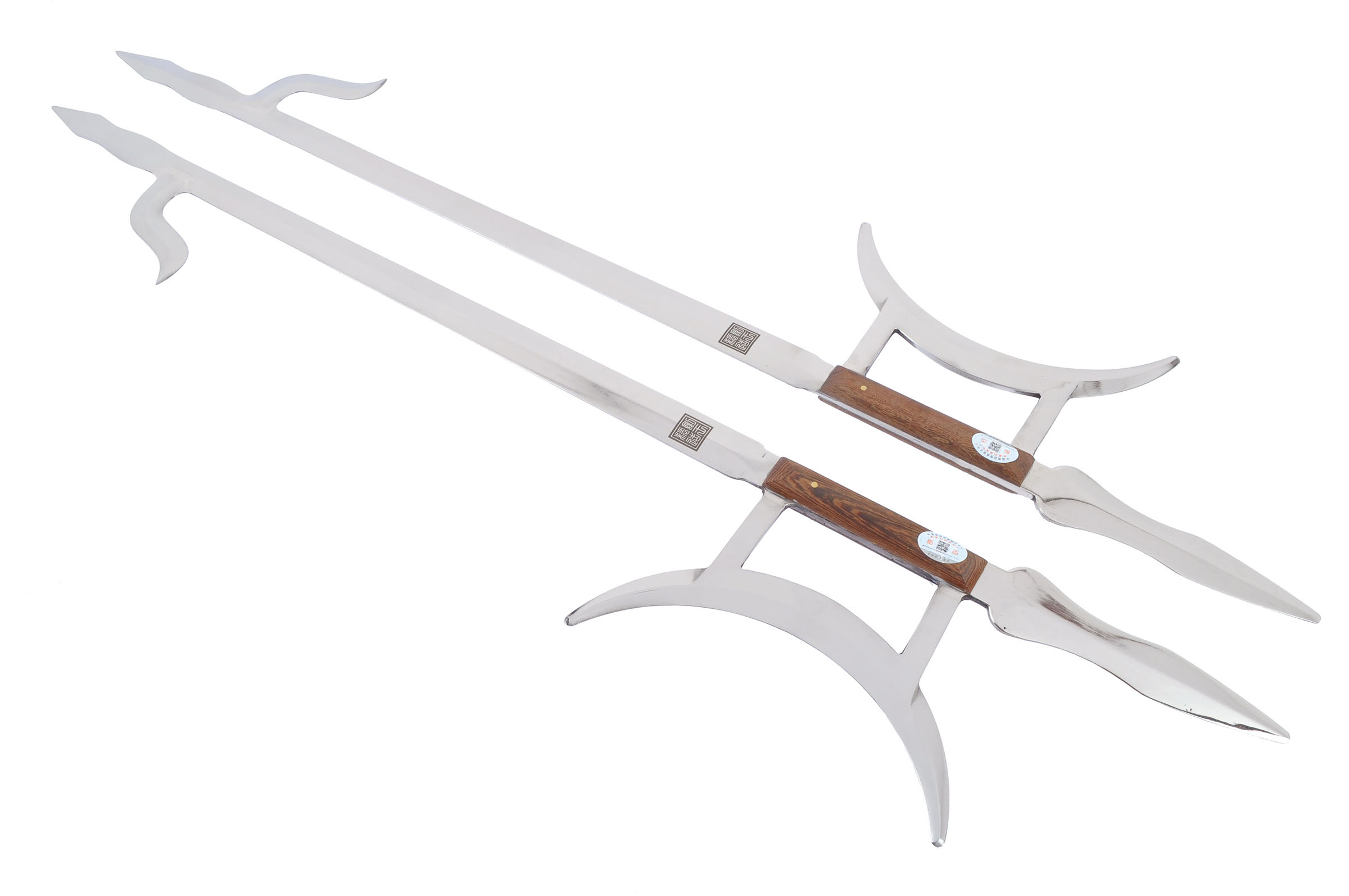
Hook swords are one of the most visually striking and complex weapons in the world of traditional martial arts. Known for their unique shape and multifunctional design, these swords stand out from most other bladed weapons. Unlike straight swords or curved sabers, hook swords feature distinctive hooked tips, crescent-shaped guards, and pointed handles, making them both practical weapons and fascinating pieces of martial arts history.
In Chinese martial arts, hook swords are often associated with Northern styles of Kung Fu. These weapons are sometimes referred to as “tiger hook swords” because of their aggressive appearance and versatile design. The weapon was traditionally used by skilled martial artists who had mastered advanced techniques, as handling hook swords effectively requires exceptional coordination and control.
Although they may look intimidating at first glance, hook swords are not just weapons of combat. Over time, they have become powerful symbols of discipline, skill, and tradition in martial arts. Today, they are frequently seen in martial arts demonstrations, training, and performances that celebrate the legacy of Chinese weaponry.
The Origins of Hook Swords
The exact origins of hook swords remain somewhat mysterious, which only adds to their intrigue. Unlike many other historical weapons that have clear documentation, hook swords appear to have developed later in Chinese martial arts history. Most historians believe they became popular during the late Qing Dynasty.
One reason historians find it difficult to trace the weapon’s origin is that hook swords were not typically used by soldiers in large military formations. Instead, they were more commonly used by martial artists, bodyguards, and individuals who practiced advanced weapon techniques. Because they were not standard military equipment, they rarely appeared in official records or battlefield documentation.
Despite this uncertainty, hook swords are widely recognized as an important part of Chinese martial arts culture. Their design reflects a deep understanding of combat strategy, allowing the user to trap, slice, hook, and control an opponent’s weapon with remarkable precision.
Unique Design and Structure of Hook Swords

One of the most fascinating aspects of hook swords is their unusual structure. Unlike traditional swords that have simple blades and handles, hook swords feature several distinct parts that each serve a purpose in combat.
The most recognizable feature is the hooked tip at the end of the blade. This hook allows the user to trap or pull an opponent’s weapon or limb. In skilled hands, this feature can completely disrupt an opponent’s attack and create opportunities for counterstrikes.
Another important component is the crescent-shaped guard located near the handle. This guard is not merely decorative; it functions as an additional blade. Martial artists can use it to slash, block, or trap incoming attacks, making the weapon extremely versatile in close combat situations.
The handle of the hook sword is also unique. Instead of ending with a simple pommel, it typically features a sharp point that can be used for stabbing. This means the weapon effectively provides multiple offensive surfaces, each designed for different techniques.
How Hook Swords Are Used in Martial Arts
Hook swords are rarely used as a single weapon. Instead, martial artists typically wield them in pairs, which significantly increases their versatility. When used together, the swords allow for fluid combinations of defensive and offensive movements.
One common technique involves linking the hooks of both swords together to create a longer weapon. This extended configuration allows practitioners to strike opponents from a greater distance. Once the attack is completed, the swords can be quickly separated to continue close combat.
Martial artists also use hook swords for trapping techniques. By hooking an opponent’s weapon or limb, they can control the direction of the attack and create openings for strikes. This makes the weapon especially effective against opponents who rely on traditional swords or staffs.
Because the weapon has so many striking surfaces, practitioners must train extensively to develop control and coordination. Mastery of hook swords requires years of practice, and many martial arts schools only teach them to advanced students.
Hook Swords in Chinese Kung Fu
In the world of Kung Fu, hook swords are often associated with Northern Shaolin styles. These martial arts systems emphasize speed, flexibility, and acrobatic movements, which complement the weapon’s dynamic design.
Many Kung Fu forms incorporate elaborate hook sword routines that showcase both combat techniques and artistic movements. These routines often include spins, jumps, and rapid changes in direction, demonstrating the practitioner’s agility and control.
Training with hook swords also helps martial artists develop better timing and awareness. Because the weapon has multiple blades and hooks, careless movements can be dangerous. Practitioners must learn to move with precision and maintain constant awareness of their surroundings.
In many ways, hook sword training represents the pinnacle of weapon mastery in Kung Fu. Only those who have already developed strong fundamentals with other weapons typically progress to learning this advanced weapon.
Techniques and Combat Strategies
The combat strategies associated with hook swords are incredibly diverse. Unlike simpler weapons that rely primarily on slashing or stabbing, hook swords offer numerous tactical options.
One of the most common strategies involves trapping. By hooking an opponent’s weapon, the practitioner can control the flow of the fight. This technique can disarm opponents or force them into vulnerable positions.
Another strategy involves sweeping attacks using the crescent guard. Because the guard functions as a secondary blade, it allows for close-range strikes that might surprise an opponent who expects attacks only from the main blade.
Hook swords are also effective for defensive maneuvers. Practitioners can use the hooked tips to redirect attacks or create distance between themselves and their opponent. This versatility makes the weapon suitable for both aggressive and defensive fighting styles.
Training with Hook Swords
Learning to use hook swords requires patience, dedication, and a strong foundation in martial arts fundamentals. Most instructors recommend that students first gain experience with simpler weapons such as staffs or straight swords before attempting hook swords.
Training usually begins with basic handling techniques. Students learn how to grip the weapon correctly and move it safely through various positions. These early lessons focus on developing muscle memory and control.
Once the fundamentals are mastered, students progress to learning forms. These choreographed sequences combine multiple techniques into fluid routines that simulate combat scenarios. Practicing forms helps students understand how the weapon moves and how different techniques connect.
Advanced training often includes partner drills. These exercises allow practitioners to test their skills against an opponent while maintaining safety and control.
Hook Swords in Martial Arts Demonstrations
In modern times, hook swords are frequently seen in martial arts demonstrations and competitions. Their dramatic appearance and dynamic techniques make them ideal for performances that capture the audience’s attention.
Demonstration routines often emphasize speed, precision, and creativity. Practitioners perform intricate movements that highlight the weapon’s unique features, including spinning attacks and linked-sword techniques.
Because of their visual appeal, hook swords have become a popular feature in martial arts shows around the world. They help introduce audiences to the richness of Chinese martial arts traditions and the incredible skill required to master traditional weapons.
These demonstrations also serve an educational purpose. By showcasing traditional weapons, martial artists preserve historical techniques and ensure that these cultural traditions continue to thrive.
Cultural Significance of Hook Swords
Hook swords hold a special place in Chinese martial arts culture. Beyond their practical use as weapons, they symbolize dedication, discipline, and the pursuit of mastery.
Many martial arts schools view hook sword training as a milestone in a student’s journey. Learning this complex weapon represents a high level of skill and commitment to the art.
The weapon is also associated with legendary martial arts heroes in folklore and storytelling. In many tales, skilled warriors wield hook swords to defeat powerful enemies or protect their communities.
These stories help reinforce the cultural importance of martial arts traditions and inspire new generations of practitioners to explore these ancient disciplines.
Hook Swords in Modern Pop Culture
Hook swords have also made their way into modern entertainment. They appear in martial arts films, video games, and television shows that celebrate traditional Chinese weaponry.
In movies, these swords are often used by highly skilled characters who demonstrate incredible agility and combat ability. The weapon’s distinctive design makes it instantly recognizable on screen.
Video games have also embraced hook swords as unique weapons that offer creative gameplay mechanics. Players can use them to perform special attacks or combine them into extended weapons, reflecting the real-world techniques used by martial artists.
Through pop culture, hook swords continue to capture the imagination of audiences worldwide.
Collecting and Displaying Hook Swords
Beyond martial arts training, hook swords are also popular among collectors and enthusiasts of historical weaponry. Their distinctive design makes them striking decorative pieces that stand out in any collection.
Collectors often seek replicas that faithfully recreate the traditional design of the weapon. High-quality replicas typically feature carefully crafted blades, detailed guards, and authentic materials.
Some collectors also display hook swords as part of martial arts memorabilia collections. These displays celebrate the history and artistry of traditional weapons while preserving their cultural significance.
Whether used for training or displayed as works of art, hook swords continue to fascinate people who appreciate the craftsmanship and history behind them.
Safety Considerations When Using Hook Swords
Because hook swords have multiple blades and sharp edges, safety is extremely important when practicing with them. Beginners should always train under the supervision of experienced instructors.
Many martial arts schools start students with wooden or dull training versions of the weapon. These practice swords allow students to learn techniques safely before progressing to sharper blades.
Proper protective equipment is also essential during partner drills. Gloves, padding, and controlled training environments help reduce the risk of injury.
By emphasizing safety and discipline, martial artists ensure that hook sword training remains both challenging and rewarding.
The Future of Hook Sword Training
Although hook swords originated centuries ago, they continue to play an important role in modern martial arts. As interest in traditional Kung Fu grows around the world, more practitioners are discovering the complexity and beauty of this unique weapon.
Many martial arts schools now include hook sword training as part of advanced weapon programs. These programs help preserve traditional techniques while adapting them for modern practice.
Online communities and martial arts organizations also contribute to keeping the tradition alive. Through demonstrations, tutorials, and cultural events, they introduce new audiences to the fascinating world of hook swords.
The future of hook swords depends on passionate practitioners who are willing to study, practice, and share this remarkable martial arts tradition.
Conclusion
Hook swords are among the most distinctive and versatile weapons in martial arts history. Their unusual design, rich cultural heritage, and advanced techniques make them a fascinating subject for martial artists and historians alike.
From their mysterious origins to their modern appearances in demonstrations and entertainment, hook swords have maintained their reputation as symbols of skill and mastery. Learning to use them requires dedication, patience, and a deep understanding of martial arts principles.
Even today, these remarkable weapons continue to inspire practitioners and captivate audiences around the world. As long as martial artists continue to train and share their knowledge, the legacy of hook swords will remain an important part of martial arts culture.
FAQs
What are hook swords used for?
Hook swords are primarily used in Chinese martial arts training, demonstrations, and advanced weapon techniques.
Why are hook swords used in pairs?
They are used in pairs to increase versatility, allowing practitioners to perform complex attacks and defensive techniques.
Are hook swords historical battlefield weapons?
They were rarely used in large military battles and were mostly practiced by martial artists and bodyguards.
What martial arts use hook swords?
Hook swords are most commonly associated with Northern Shaolin Kung Fu and other traditional Chinese martial arts.
Can beginners learn hook swords?
Most martial arts schools only teach hook swords to advanced students who already have strong weapon fundamentals.
What makes hook swords unique?
Their hooked tips, crescent guards, and pointed handles provide multiple striking surfaces and combat techniques.
Are hook swords still used today?
Yes, they are used in martial arts training, demonstrations, and cultural performances worldwide.
Do hook swords require special training?
Yes, mastering hook swords requires years of dedicated practice and advanced martial arts skills.
Are hook swords dangerous to train with?
Like any weapon, they can be dangerous without proper supervision, which is why training usually begins with dull practice versions.
Why are hook swords popular in martial arts shows?
Their dramatic design and dynamic techniques make them visually impressive for demonstrations and performances.
Also read:TN Flag: History, Meaning, Design, and Cultural Importance