Introduction to Mango Pomelo Sago
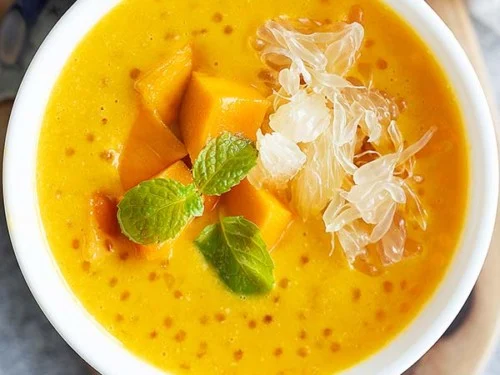
Mango pomelo sago is one of those desserts that instantly transports you to a warm tropical afternoon. It is creamy, fruity, refreshing, and surprisingly balanced despite its sweetness. Originally popularized in Hong Kong, this chilled dessert has become a staple in Chinese dessert shops, Southeast Asian cafés, and modern Asian fusion restaurants around the world. The combination of ripe mango, juicy pomelo sacs, tiny chewy sago pearls, and rich coconut milk creates a layered texture that feels both luxurious and comforting. At first glance, it may look like a simple fruit pudding, but once you taste it, you realize there is far more happening beneath the surface. The flavor profile is complex yet clean, making it a favorite among people who typically avoid overly heavy desserts.
What makes mango pomelo sago special is its contrast. You get the silky smoothness of mango puree, the bright citrusy pop of pomelo, the subtle chew of sago pearls, and the creaminess of coconut milk all in one spoonful. Each ingredient plays a distinct role, and when properly prepared, none of them overpower the others. This balance is what separates an average bowl from an exceptional one. It is not just about mixing fruit with coconut milk; it is about understanding texture, sweetness levels, temperature, and ingredient quality.
Over time, mango pomelo sago has evolved from a regional specialty to an international dessert icon. Cafés now serve it in elegant glasses, layered parfait-style, or even transformed into cakes and ice creams. Despite its growing popularity, the traditional chilled bowl version remains the gold standard. In this guide, we will explore everything you need to know about mango pomelo sago, from its origins to expert preparation techniques, ingredient selection, variations, nutritional aspects, and serving ideas.
The Origins and Cultural Background
Mango pomelo sago is widely associated with Hong Kong dessert culture, particularly in the 1980s and 1990s when modern dessert houses began redefining traditional Cantonese sweets. Unlike many older Chinese desserts that focus on red beans, sesame, or herbal ingredients, mango pomelo sago represents a shift toward fruit-forward, tropical flavors. This change reflected global influences and increased access to imported fruits like premium mango varieties. The dessert quickly gained popularity because it felt lighter and more refreshing than syrup-based traditional sweets.
Interestingly, mango pomelo sago is often credited to a Hong Kong dessert chain that introduced it as a seasonal specialty. The idea was simple yet innovative: combine Southeast Asian tropical fruits with classic Chinese sago pearls and coconut milk. The result was a dessert that appealed to younger generations seeking something modern yet rooted in Asian flavors. It was especially popular during hot summers, when heavy desserts felt overwhelming.
As tourism and migration increased, mango pomelo sago spread to countries such as Singapore, Malaysia, Taiwan, and beyond. Each region added subtle adjustments based on local taste preferences. Some versions are sweeter, others creamier, and some emphasize pomelo more strongly for added bitterness. Despite these variations, the core concept remains consistent: chilled mango puree blended with coconut milk, combined with sago pearls and fresh pomelo.
Understanding the Key Ingredients
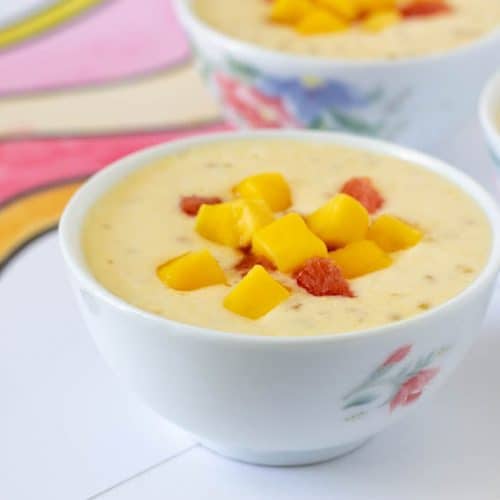
To truly master mango pomelo sago, you need to understand each ingredient and its function. Let us start with mangoes. The mango is the heart of the dessert, providing both flavor and natural sweetness. Ideally, you should use ripe, fragrant mangoes with vibrant orange flesh. Varieties like Alphonso, Ataulfo, or Honey mangoes are often preferred because they are less fibrous and naturally creamy. The texture of the puree depends entirely on the mango quality. If the mango lacks sweetness, the dessert will taste flat even if you add sugar.
Pomelo is the second defining ingredient. Unlike grapefruit, pomelo is milder and less acidic, though it still carries a subtle bitterness. This slight bitterness is crucial because it balances the richness of coconut milk and the sweetness of mango. When preparing pomelo, it is important to carefully remove the membrane and extract only the juicy sacs. Any leftover white pith will introduce unpleasant bitterness.
Sago pearls are small, translucent balls made from starch extracted from tropical palm stems. When cooked properly, they become soft and chewy, similar to tapioca pearls but much smaller. Their primary role in mango pomelo sago is texture. Without sago, the dessert would feel like a smoothie. The pearls add structure and a satisfying bite that contrasts with the smooth mango puree.
Coconut milk ties everything together. It adds creaminess and a subtle nutty aroma that complements the tropical fruits. Some recipes combine coconut milk with evaporated milk or condensed milk for added richness. The choice depends on personal preference, but balance is key. Too much coconut milk can overpower the fruit, while too little makes the dessert watery.
Step-by-Step Preparation from an Expert Perspective
Making mango pomelo sago may seem straightforward, but attention to detail makes all the difference. Start by cooking the sago pearls. Bring a large pot of water to a rolling boil and add the pearls gradually while stirring. It is important to use plenty of water because sago releases starch during cooking. Stir occasionally to prevent clumping. Once the pearls turn mostly translucent with tiny white centers, turn off the heat and cover the pot for a few minutes. This resting time allows the centers to finish cooking without becoming mushy.
After cooking, rinse the sago thoroughly under cold running water. This step removes excess starch and stops the cooking process. Drain well and set aside. Next, prepare the mango puree. Peel and cube ripe mangoes, reserving a few small cubes for garnish. Blend the majority of the mango until completely smooth. If the mango is perfectly ripe, you may not need additional sugar.
In a mixing bowl, combine the mango puree with coconut milk. Adjust the sweetness by adding condensed milk or simple syrup if necessary. The mixture should be creamy but not overly thick. Fold in the cooked sago pearls and gently mix. Finally, add fresh pomelo sacs and stir carefully to avoid breaking them apart.
Chill the mixture for at least one to two hours before serving. Mango pomelo sago tastes best when cold because the flavors become more defined and refreshing. Serve in clear bowls or glasses to highlight the vibrant orange color.
Flavor Profile and Texture Analysis
From a sensory perspective, mango pomelo sago is fascinating. The first impression is sweetness from the mango, followed by the creamy smoothness of coconut milk. Then comes the juicy pop of pomelo, which introduces a subtle citrus note that prevents the dessert from feeling heavy. Finally, the sago pearls provide chewiness, extending the eating experience.
Texture plays a critical role. If the sago is overcooked, it becomes mushy and blends into the puree, eliminating contrast. If undercooked, it feels hard and unpleasant. The mango puree should be silky without fibers. Pomelo should be fresh and crisp, not dried out. When all elements align, each spoonful offers a harmonious mix of smooth, creamy, juicy, and chewy sensations.
Temperature also affects flavor perception. Served warm, the dessert would feel overly sweet and thick. Served chilled, it becomes refreshing and light. That is why refrigeration is not optional; it is essential for optimal taste.
Variations Around the World
Although the traditional version is widely loved, creative variations have emerged globally. Some chefs add small cubes of mango instead of blending everything into puree, creating a chunkier texture. Others incorporate grapefruit when pomelo is unavailable, though this slightly changes the bitterness level.
In Southeast Asia, some versions include additional fruits such as passion fruit or lychee for extra aroma. Modern dessert cafés may layer mango pomelo sago with whipped cream or turn it into a frozen dessert similar to ice cream. There are also dairy-free and vegan versions that rely solely on coconut milk without condensed milk.
Another popular twist involves turning mango pomelo sago into a cake filling or mousse. By adjusting the thickness with gelatin or agar-agar, chefs can transform the dessert into a structured pastry component. Despite these creative adaptations, the classic chilled bowl remains the most authentic and widely appreciated form.
Nutritional Insights and Health Considerations
Compared to many heavy desserts, mango pomelo sago can be relatively light when prepared thoughtfully. Mango provides vitamin C, vitamin A, and antioxidants. Pomelo is rich in fiber and also contains significant vitamin C. Coconut milk, while higher in fat, offers medium-chain triglycerides that are metabolized differently from long-chain fats.
However, portion control matters. The addition of condensed milk or sugar increases calorie content. If you are health-conscious, you can reduce added sugars and rely on the natural sweetness of ripe mangoes. Using light coconut milk is another option, though it slightly reduces creaminess.
Sago itself is primarily carbohydrate-based and offers little nutritional value beyond energy. It should be viewed as a texture component rather than a health ingredient. Overall, mango pomelo sago can fit into a balanced diet when enjoyed in moderation.
Common Mistakes and How to Avoid Them
One common mistake is using unripe mangoes. No amount of added sugar can replicate the natural aroma of a perfectly ripe mango. Another mistake is not rinsing sago properly, which results in a sticky, glue-like consistency.
Some people overmix the pomelo, breaking the delicate sacs and losing the signature juicy texture. Always fold gently. Another issue is incorrect sweetness balance. Taste as you go. The mango puree should be slightly sweeter than you expect because chilling reduces perceived sweetness.
Finally, avoid serving immediately after mixing. Resting in the refrigerator allows flavors to meld and improve significantly.
Serving and Presentation Ideas
Presentation enhances the overall experience. Clear glass bowls or stemmed dessert cups highlight the vibrant orange color. Garnish with small mango cubes, a few pomelo sacs, and perhaps a mint leaf for freshness.
For a more refined approach, serve mango pomelo sago in layered parfait style. Start with mango puree, add a sago-coconut layer, then pomelo, and repeat. This not only looks elegant but also creates varied bites.
You can also serve it in hollowed-out mango shells for a dramatic tropical presentation. No matter how you present it, keep it chilled until the moment of serving.
Why Mango Pomelo Sago Remains Timeless
Trends in the dessert world come and go, but mango pomelo sago continues to thrive because it satisfies multiple cravings at once. It is fruity yet creamy, light yet indulgent, simple yet refined. Its tropical flavor profile appeals to a wide audience, and its visual appeal makes it social media friendly.
Moreover, it adapts well to modern dietary preferences. Vegan versions are easy to create, and sugar levels can be adjusted without compromising the essence of the dessert. Its versatility ensures that it remains relevant across cultures and generations.
Ultimately, mango pomelo sago is more than just a dessert. It represents innovation within tradition, showing how classic ingredients can be combined in new ways to create something unforgettable.
FAQs
What is mango pomelo sago?
It is a chilled Asian dessert made with mango puree, pomelo sacs, sago pearls, and coconut milk.
Can I use grapefruit instead of pomelo?
Yes, but grapefruit is more bitter and slightly changes the flavor balance.
How long can mango pomelo sago be stored?
It is best consumed within 24 hours for optimal freshness and texture.
Is mango pomelo sago vegan?
It can be vegan if made without condensed milk or dairy products.
Why are my sago pearls sticky?
They were likely not rinsed thoroughly after cooking.