Understanding What “Nhiem Sac The” Really Means
When people first encounter the term “nhiem sac the,” they are usually stepping into the fascinating world of biology. The phrase comes from Vietnamese and translates directly to “chromosomes,” one of the most important building blocks of life. Chromosomes are microscopic structures found inside the nucleus of nearly every cell in the human body, and they carry the genetic instructions that determine everything from eye color to how the body grows and repairs itself. Without them, life as we know it simply would not exist.
To picture a chromosome, imagine a tightly coiled thread made of DNA. This thread contains thousands of genes, and each gene acts like a tiny instruction manual guiding the body on how to function. The reason chromosomes are so tightly packed is efficiency. If the DNA from just one cell were stretched out, it would be about two meters long. Compressing that material into a microscopic space requires an incredibly sophisticated biological design.
Most humans have 46 chromosomes arranged in 23 pairs. Half come from the mother, and half come from the father, creating a unique genetic combination. This is why siblings can look similar yet still be noticeably different. Chromosomes are essentially nature’s way of ensuring both continuity and diversity within a species.
The Structure of Chromosomes: Small but Extremely Complex
Although chromosomes are tiny, their structure is remarkably detailed. Each chromosome is made primarily of DNA wrapped around proteins called histones. These proteins help organize the DNA so it can fit neatly inside the nucleus while remaining accessible for important cellular processes like replication and transcription.
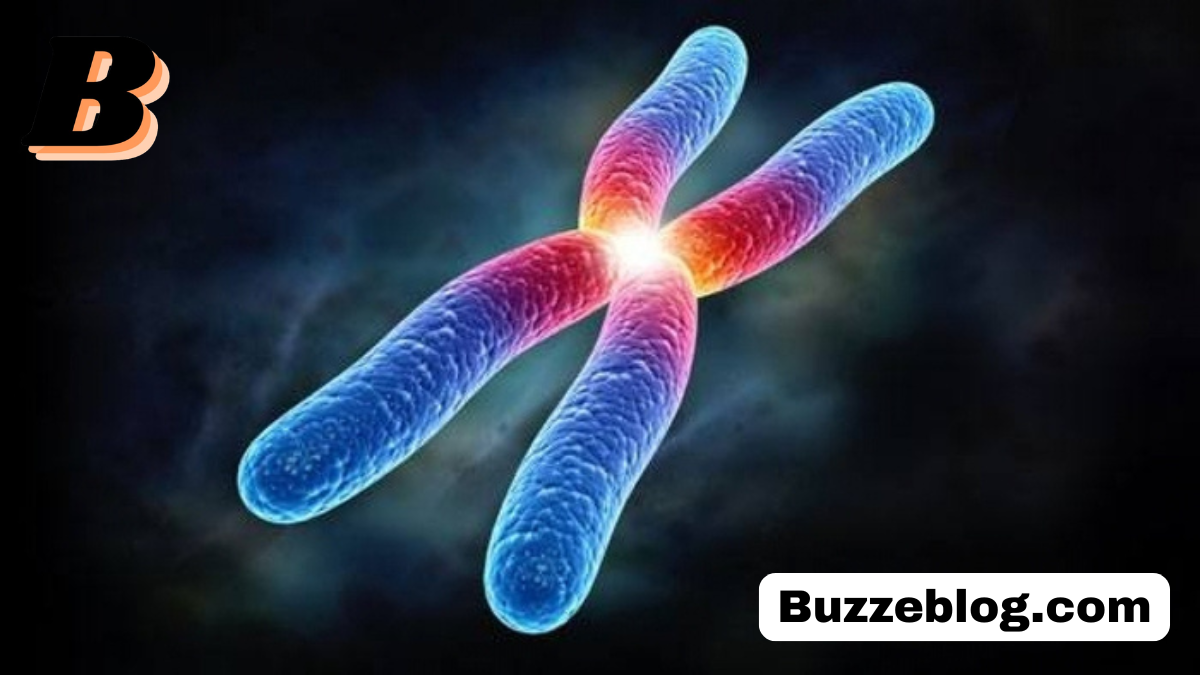
A chromosome has a distinctive shape that becomes especially visible during cell division. It often resembles an “X,” but that shape only appears when the chromosome has duplicated itself. Each side of the X is called a chromatid, and the two chromatids are connected at a region known as the centromere. This connection ensures that when the cell divides, each new cell receives an identical copy of genetic information.
Another important feature is the telomere, located at the ends of chromosomes. Telomeres act like protective caps, preventing DNA from fraying or sticking to neighboring chromosomes. Scientists often compare them to the plastic tips on shoelaces. Interestingly, telomeres shorten as we age, which is why they are frequently studied in research related to aging and longevity.
Why Chromosomes Matter More Than You Might Think
It is easy to underestimate chromosomes because we cannot see them without specialized equipment. However, they influence nearly every aspect of our physical and biological identity. From determining biological sex to regulating how cells grow, chromosomes quietly orchestrate countless processes behind the scenes.
For example, the 23rd pair of chromosomes determines whether a person is biologically male or female. Typically, females have two X chromosomes, while males have one X and one Y chromosome. This single difference triggers a cascade of developmental pathways long before birth.
Chromosomes also ensure that cells function correctly. When a cell divides, it must distribute genetic material evenly. If something goes wrong during this process, it can lead to serious health conditions. This is why accurate chromosome replication is one of the most critical tasks in cellular biology.
How Chromosomes Are Passed from One Generation to the Next
Inheritance is one of the most fascinating aspects of chromosomes. Every human begins as a single cell formed when a sperm and egg combine. Each contributes 23 chromosomes, creating a complete set of 46. This process not only ensures survival of the species but also drives genetic variation.
During the formation of reproductive cells, a special type of cell division called meiosis occurs. Unlike regular cell division, meiosis reduces the chromosome number by half. This reduction is essential because it prevents chromosome numbers from doubling with every generation. Without meiosis, biological systems would quickly become unstable.
Another interesting phenomenon is genetic recombination. Before reproductive cells fully develop, chromosomes exchange segments of DNA. Think of it as shuffling a deck of cards. This mixing process explains why children inherit traits from both parents but rarely in identical patterns.
Different Types of Chromosomes and What They Do
Chromosomes are not all identical. Scientists classify them into two main categories: autosomes and sex chromosomes. Autosomes make up the first 22 pairs and control most bodily traits, including height, metabolism, and immune responses.
Sex chromosomes form the final pair and guide sexual development. However, their role extends beyond gender determination. They also carry genes related to brain development, fertility, and even certain inherited conditions.
Chromosomes can also be categorized by shape and size. Some are long, others short; some have centromeres near the middle, while others have them closer to the ends. These structural differences help scientists identify abnormalities and study evolutionary relationships among species.
Chromosomal Abnormalities: When the Blueprint Changes
While chromosomes are designed to replicate accurately, mistakes sometimes occur. These errors can happen during cell division or be inherited from a parent. Chromosomal abnormalities fall into two major groups: numerical and structural.
Numerical abnormalities involve having too many or too few chromosomes. One well-known example is trisomy, where an individual has three copies of a chromosome instead of two. Structural abnormalities, on the other hand, occur when parts of a chromosome are missing, duplicated, or rearranged.
These changes can affect development in different ways. Some abnormalities cause noticeable physical traits, while others influence learning ability or overall health. Advances in medical technology now allow many of these conditions to be detected early, sometimes even before birth.
The Role of Chromosomes in Modern Genetics
Modern genetics would not exist without the discovery of chromosomes. Early scientists suspected that hereditary information must be stored somewhere within cells, but it was not until improved microscopes became available that chromosomes were observed directly.
Today, chromosomes are central to genetic testing. Doctors can analyze them to identify inherited conditions, assess reproductive health, and guide treatment plans. This has transformed medicine from a reactive discipline into a more predictive one.
Chromosomal research also plays a major role in cancer studies. Many cancers are linked to genetic mutations that alter how cells divide. By understanding these changes, researchers can develop targeted therapies that focus specifically on affected cells while minimizing damage to healthy tissue.
Chromosomes and Evolution: A Story Written in DNA
Chromosomes are more than just biological structures; they are historical records. Each chromosome carries evidence of evolutionary changes that occurred over millions of years. By comparing chromosome patterns across species, scientists can trace ancestral relationships.
For instance, humans share a significant portion of their DNA with other mammals. Certain chromosome similarities suggest common ancestors, highlighting how life on Earth is interconnected. Even small genetic shifts can lead to major evolutionary adaptations over time.
Occasionally, entire chromosomes fuse or split during evolution. One famous example involves human chromosome 2, which scientists believe formed from the fusion of two ancestral chromosomes. This event marks a key difference between humans and some primates.
How Lifestyle and Environment Interact with Chromosomes
Although chromosomes provide the genetic blueprint, they do not operate in isolation. Environmental factors can influence how genes are expressed, a field known as epigenetics. This means that while you cannot change your DNA sequence, certain behaviors may affect how your genes function.
Diet, stress, physical activity, and exposure to toxins can all leave chemical markers on DNA. These markers do not alter the genetic code itself but can turn genes on or off. Over time, such changes may impact health, aging, and disease risk.
This interplay between genetics and environment challenges the old idea that biology is purely predetermined. Instead, it reveals a dynamic system where lifestyle choices can shape biological outcomes.
Chromosomes in Medical Diagnostics and Future Therapies
Medical science has made extraordinary progress in understanding chromosomes. Techniques such as karyotyping allow specialists to visualize chromosomes and detect irregularities. More advanced tools, including genomic sequencing, provide even deeper insights into genetic structure.
These technologies are already improving patient care. Couples planning a family can undergo screening to assess potential genetic risks. Doctors can tailor treatments based on a person’s chromosomal profile, moving healthcare toward personalized medicine.
Looking ahead, gene-editing technologies hold enormous promise. Scientists are exploring ways to correct faulty genes directly within chromosomes. While ethical considerations remain, the potential to prevent inherited diseases represents one of the most exciting frontiers in modern biology.
The Future of Chromosome Research
As research continues, chromosomes are likely to remain at the center of scientific discovery. Artificial intelligence is helping researchers analyze massive genetic datasets, uncovering patterns that were previously impossible to detect. This could lead to breakthroughs in everything from regenerative medicine to age-related diseases.
Another emerging area involves telomere preservation. If scientists learn how to maintain telomere length safely, it could reshape our understanding of aging. However, such possibilities require careful study to avoid unintended consequences.
Ultimately, the study of “nhiem sac the” reminds us that life operates on a deeply intricate level. Every cell contains a library of information that guides development, adaptation, and survival. The more we learn about chromosomes, the better equipped we become to understand ourselves.
Common Misconceptions About Chromosomes
One widespread misconception is that chromosomes alone determine destiny. While they provide the genetic framework, many traits are influenced by multiple genes interacting with environmental factors. Intelligence, personality, and physical abilities are rarely controlled by a single genetic switch.
Another myth is that mutations are always harmful. In reality, some mutations are neutral, and a few are beneficial. Evolution relies on these genetic variations to drive adaptation. Without mutation, species would struggle to survive changing environments.
Finally, people often assume chromosomal research is only relevant to scientists. In truth, it affects everyday life through medical care, ancestry testing, and even nutrition strategies tailored to genetic profiles.
Teaching the Next Generation About Chromosomes
Education plays a critical role in making genetics accessible. When students understand chromosomes, they gain insight into how life functions at a fundamental level. This knowledge encourages scientific curiosity and promotes informed health decisions.
Interactive tools, digital simulations, and laboratory experiments are helping educators bring complex genetic concepts to life. Instead of memorizing definitions, learners can visualize how chromosomes behave during cell division.
As public awareness grows, conversations about genetics are becoming more nuanced. People are increasingly interested in how their DNA shapes their identity, heritage, and long-term health.
Conclusion: Why “Nhiem Sac The” Deserves Our Attention
Chromosomes may be invisible to the naked eye, but their impact is enormous. They carry the instructions that build and sustain life, connect generations, and drive evolution. Understanding them is not just a scientific pursuit; it is a way of understanding what it means to be human.
From inheritance to medical innovation, chromosomes influence both personal health and the future of medicine. As technology advances, our ability to read and interpret genetic information will only improve.
In the end, studying “nhiem sac the” reveals a powerful truth: inside every cell lies a detailed map of life, written in a language scientists are still learning to fully decode.
FAQs
What does “nhiem sac the” mean?
It means chromosomes, the structures inside cells that carry genetic information.
How many chromosomes do humans normally have?
Humans typically have 46 chromosomes arranged in 23 pairs.
What is the main function of chromosomes?
Their primary role is to store and transmit DNA that guides growth, development, and body functions.
Are chromosomes inherited from parents?
Yes, half come from the mother and half from the father.
Do chromosomes determine biological sex?
Yes, the X and Y chromosomes usually determine whether a person is biologically male or female.
What happens if someone has extra or missing chromosomes?
It can lead to genetic conditions that may affect development and health.
Can chromosomal abnormalities be detected before birth?
Many abnormalities can be identified through prenatal genetic testing.
Are all chromosomes the same size?
No, chromosomes vary in size and shape depending on the genetic material they carry.
Do lifestyle choices change chromosomes?
Lifestyle does not change the DNA sequence but can influence gene activity through epigenetics.
Why are chromosomes important for evolution?
They carry genetic variations that allow species to adapt and evolve over time.
Also read: Mary Ash: A Comprehensive Look at Her Life, Influence, and Lasting Legacy