
Introduction to the Shekel of Tyre
The Shekel of Tyre is one of the most fascinating and historically significant coins ever produced in the ancient world. Minted in the ancient city of Tyre, this coin was not just a medium of exchange—it was a symbol of economic strength, political identity, and religious importance. Over time, it became widely recognized across different regions, especially in the eastern Mediterranean.
What makes the Shekel of Tyre particularly interesting is its consistent silver purity and craftsmanship. While many ancient coins varied in quality depending on political changes or economic struggles, the Tyrian shekel maintained a remarkably high standard. This consistency earned it a reputation for reliability, which is why it was accepted far beyond its place of origin.
In addition, the Shekel of Tyre holds a special place in religious and historical studies. It is closely linked with the financial practices of ancient Judea and is believed to have been used in the Second Temple in Jerusalem. Because of this, the coin is often discussed in both historical and biblical contexts, making it valuable not just to collectors but also to scholars.
Historical Background of Tyre and Its Coinage
The city of Tyre was one of the most powerful centers of the ancient Phoenicia. Known for its maritime trade, skilled artisans, and purple dye industry, Tyre played a crucial role in connecting different civilizations. Its wealth and influence naturally led to the development of a strong monetary system.
Coinage in Tyre began as part of a broader trend in the ancient world, where city-states started minting their own coins to facilitate trade. However, Tyre quickly distinguished itself by producing coins of exceptional quality. The Shekel of Tyre became the standard silver coin of the region, widely accepted in trade across the Mediterranean.
During the Hellenistic period, especially under the influence of Alexander the Great and his successors, Tyre continued to thrive. Even as empires rose and fell, the city maintained its minting practices. This continuity helped preserve the reputation of the Tyrian shekel, making it one of the most trusted currencies of its time.
Physical Characteristics of the Shekel of Tyre
One of the defining features of the Shekel of Tyre is its consistent weight and high silver content. Typically weighing around 14 grams, the coin was made from nearly pure silver. This level of purity was rare in the ancient world, where many coins were debased over time due to economic pressures.
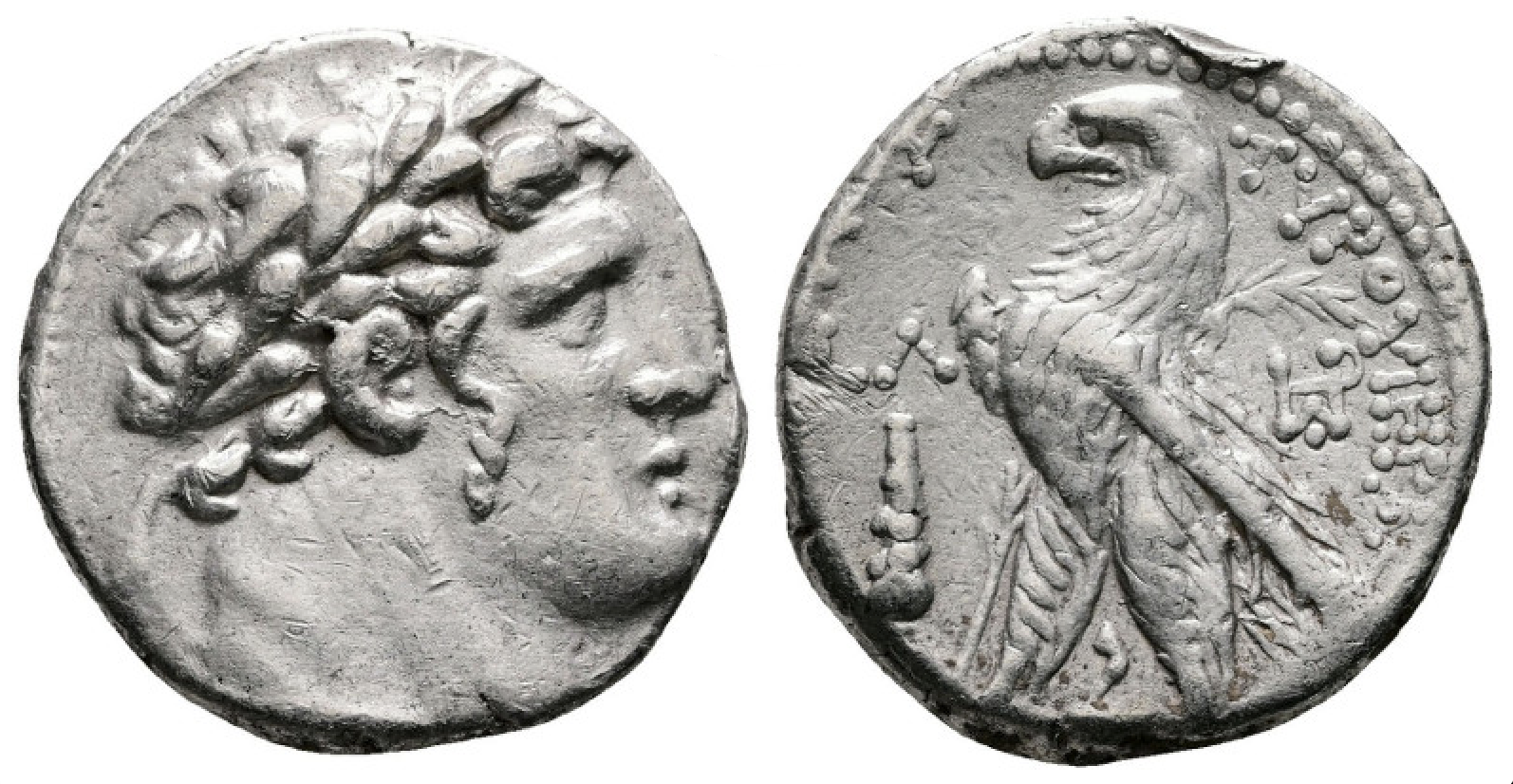
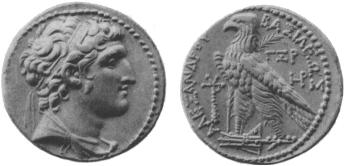
The design of the coin is equally impressive. On one side, it usually features the head of a deity, often identified as Melqart, the patron god of Tyre. On the reverse side, there is commonly an eagle standing on a ship’s prow, symbolizing Tyre’s maritime strength. These artistic elements were not only decorative but also served as a mark of authenticity.
Another notable aspect is the use of Greek inscriptions. This reflects the cultural influence of the Hellenistic world, even though Tyre retained its Phoenician identity. The combination of artistic excellence and linguistic diversity makes the Shekel of Tyre a unique artifact that represents a blend of cultures.
The Role of the Shekel in Ancient Trade
Trade was the backbone of Tyre’s economy, and the shekel played a central role in facilitating commercial transactions. Merchants from different regions preferred the Tyrian shekel because of its reliability. When dealing with large-scale trade, having a trusted currency was essential, and the Shekel of Tyre fulfilled that need perfectly.
The coin was used in various types of trade, including textiles, metals, spices, and luxury goods. Tyre’s strategic location allowed it to act as a hub for goods coming from Asia, Africa, and Europe. As a result, the shekel circulated widely, reaching markets far beyond the city itself.
Furthermore, the coin’s acceptance across different cultures highlights its importance. Unlike local currencies that were limited to specific regions, the Shekel of Tyre became an international standard. This widespread use contributed to its lasting legacy and continued interest among historians and collectors.
Religious Significance of the Shekel of Tyre
The Shekel of Tyre holds a special place in religious history, particularly in connection with the Second Temple in Jerusalem. According to historical sources, the temple tax required by Jewish law had to be paid in a specific type of coin, and the Tyrian shekel was preferred due to its high silver purity.
This requirement created a unique situation where a coin featuring a foreign deity was used in a religious setting. Despite this apparent contradiction, the practical need for a reliable and pure silver coin outweighed theological concerns. This highlights the complex relationship between religion and economics in the ancient world.
The connection between the Shekel of Tyre and religious practices has also made it a subject of interest in biblical studies. Some scholars believe that coins like these may have been involved in significant events described in religious texts. While exact details are debated, the association adds another layer of importance to the coin.
The Influence of Hellenistic Culture on the Coin
The Hellenistic period brought significant cultural changes to the eastern Mediterranean, and Tyre was no exception. After the conquests of Alexander the Great, Greek language, art, and customs spread throughout the region. This influence is clearly visible in the design of the Shekel of Tyre.
The use of Greek inscriptions and artistic styles reflects the blending of cultures. While the coin retained its local identity, it also incorporated elements that made it recognizable to a broader audience. This adaptability contributed to its widespread acceptance.
At the same time, Tyre managed to preserve its unique traditions. The depiction of Melqart, for example, shows how local religious beliefs were integrated into a Hellenistic framework. This balance between tradition and innovation is one of the reasons why the Shekel of Tyre remains so fascinating.
Minting Process and Techniques
The production of the Shekel of Tyre involved advanced techniques for its time. Skilled artisans used carefully prepared dies to strike the coins, ensuring uniformity in design and weight. This level of precision was not common in many other regions.
The process began with the refining of silver to achieve high purity. This was followed by the creation of blanks, which were then struck with engraved dies. The consistency in weight and design indicates a well-organized minting system.
Moreover, the quality control measures were impressive. Coins that did not meet the required standards were likely melted down and reused. This commitment to quality helped maintain the reputation of the Tyrian shekel as a reliable currency.
Economic Impact of the Shekel of Tyre
The Shekel of Tyre played a crucial role in shaping the economy of the ancient Mediterranean. Its reliability encouraged trade and investment, contributing to economic growth. Merchants could conduct transactions with confidence, knowing that the coin would be accepted widely.
The coin also influenced other monetary systems. Some regions adopted similar standards in an attempt to replicate the success of the Tyrian shekel. This demonstrates its impact beyond its place of origin.
In addition, the shekel’s stability helped Tyre maintain its position as a major economic power. Even during periods of political change, the coin continued to be used, highlighting its importance in sustaining economic activity.
Comparison with Other Ancient Coins
When compared to other ancient coins, the Shekel of Tyre stands out for its quality and consistency. Many coins from the same period suffered from debasement, where the silver content was reduced over time. In contrast, the Tyrian shekel maintained its high purity.
The design of the coin is also noteworthy. While other coins featured simple or repetitive designs, the Shekel of Tyre displayed intricate artwork and symbolism. This made it not only a functional object but also a piece of art.
Furthermore, its widespread acceptance sets it apart. While most coins were limited to specific regions, the Tyrian shekel was used across different cultures and economies. This level of influence is rare and underscores its significance.
Archaeological Discoveries and Findings
Archaeologists have discovered numerous examples of the Shekel of Tyre in different parts of the world. These findings provide valuable insights into ancient trade routes and economic practices. The presence of these coins in distant locations confirms their widespread use.
Excavations in regions around the Mediterranean have revealed hoards of Tyrian shekels, often buried for safekeeping. These discoveries help historians understand how people stored wealth and conducted transactions.
In addition, the study of these coins has contributed to our knowledge of ancient minting techniques. By analyzing the metal composition and design, researchers can learn more about the technological capabilities of the time.
The Shekel of Tyre in Modern Collecting
Today, the Shekel of Tyre is highly sought after by coin collectors and historians. Its historical significance, combined with its artistic beauty, makes it a valuable addition to any collection. Collectors often seek well-preserved examples, which can command high prices.
The coin is also studied by academics interested in ancient history, economics, and religion. Its connection to important historical events adds to its appeal.
However, collecting ancient coins requires careful consideration. Authenticity is a major concern, as counterfeit coins are not uncommon. Experts use various methods to verify the authenticity of Tyrian shekels, including examining weight, design, and metal composition.
Preservation and Authentication
Preserving the Shekel of Tyre is essential to maintaining its historical value. Proper storage conditions, such as low humidity and stable temperature, help prevent damage. Collectors often use protective cases to safeguard their coins.
Authentication is another critical aspect. Experts rely on detailed analysis to determine whether a coin is genuine. This includes studying the design, inscriptions, and metal content.
Advancements in technology have made it easier to authenticate ancient coins. Techniques such as X-ray fluorescence analysis can provide accurate information about the composition of the metal, helping to identify genuine pieces.
Cultural Legacy of the Shekel of Tyre
The legacy of the Shekel of Tyre extends beyond its use as a currency. It represents a period of cultural exchange and economic development in the ancient world. The coin serves as a reminder of the interconnectedness of different civilizations.
Its influence can be seen in later monetary systems, which adopted similar standards of weight and purity. This demonstrates how innovations in one region can have a lasting impact on others.
Moreover, the Shekel of Tyre continues to inspire interest among historians, collectors, and enthusiasts. Its story offers valuable insights into the complexities of ancient societies.
FAQs
What is the Shekel of Tyre?
It is a high-purity silver coin minted in the ancient city of Tyre and widely used in trade and religious contexts.
Why was the Shekel of Tyre important?
It was valued for its consistent silver quality and was widely accepted across different regions.
Where was the Shekel of Tyre used?
It circulated throughout the Mediterranean and was especially important in Jerusalem for temple tax payments.
What makes the coin unique?
Its high silver purity, detailed design, and widespread acceptance set it apart from other ancient coins.
Is the Shekel of Tyre mentioned in religious history?
Yes, it is closely associated with the financial practices of the Second Temple in Jerusalem.
How much does a Shekel of Tyre weigh?
It typically weighs around 14 grams.
What is depicted on the coin?
It usually features the head of Melqart and an eagle on the reverse side.
Are Shekels of Tyre valuable today?
Yes, they are highly valued by collectors and historians.
How can you identify a genuine coin?
Experts examine its weight, design, and metal composition to verify authenticity.
Why is the Shekel of Tyre still studied today?
It provides important insights into ancient trade, culture, and religious practices.
Also read:Sandy Hill NY – A Complete Guide to History, Lifestyle, and Local Charm